
• (727) 586-2681
  • 1472 Jordan Hills Court, Clearwater, FL 33756

Dental Implants

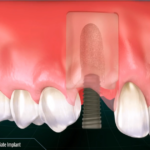
immediate implant placement with bone graft in healthy socket

Immediate Implant Placement: When It Works Best

Immediate implant placement is an advanced technique that allows a dental implant to be placed at the same time a tooth is removed. While this approach can reduce treatment time and help preserve bone, it is not always the right choice for every patient.

When Immediate Placement Is Ideal

First, success depends heavily on proper case selection. For example, the surrounding bone must be intact, especially the facial bone. In addition, there must be enough bone volume to achieve strong implant stability at the time of placement.

Equally important, there should be no active infection. If infection is present, it can compromise healing and long term success. Furthermore, thick and healthy gum tissue helps support better esthetic outcomes.

When all of these factors align, immediate implant placement combined with bone grafting can deliver predictable and efficient results.

When a Delayed Approach Is Better

However, not every case meets these criteria. If the bone is damaged, too thin, or missing, placing an implant immediately may increase the risk of failure or gum recession. In these situations, a staged approach often leads to better long term outcomes.

For more information on dental implants, visit the American Academy of Periodontology.

You can also explore our related services on implant procedures at Britten Perio to understand your options.

Why Timing Matters

Ultimately, the goal is not speed but success. Although immediate implant placement can be a great option, careful evaluation ensures the best possible result for both function and esthetics.
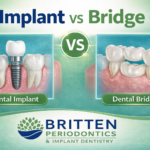
comparison of dental implant and dental bridge illustration

Dental Implants vs Bridge: What You Need to Know

Video courtesy of Spear Education

If you’re missing a tooth, understanding dental implants vs bridge options is essential before making a decision. While both treatments restore your smile, they function very differently. Therefore, choosing the right one depends on your long-term goals, oral health, and budget.

What Is a Dental Implant?

A dental implant is a permanent solution that replaces both the root and crown of a missing tooth. In addition, it integrates with your jawbone, helping maintain bone health over time. Unlike other options, implants do not rely on neighboring teeth for support.

Because of this, implants are often considered the gold standard in tooth replacement. According to Spear Education, implants provide superior durability and function compared to traditional methods.

What Is a Dental Bridge?

On the other hand, a dental bridge fills the gap by anchoring to adjacent teeth. As a result, those surrounding teeth must be reshaped to support the bridge. While this option can be quicker, it may compromise otherwise healthy teeth.

Which Option Is Right for You?

When comparing dental implants vs bridge, it’s important to consider longevity and oral health. Implants typically last longer and help prevent bone loss. However, bridges may be suitable for patients seeking a faster or more cost-effective solution.

For a deeper dive, check out this helpful video from Spear Education: https://www.speareducation.com

Additionally, you can explore more treatment options on our website: https://www.brittenperio.com/dental-implants/

Final Thoughts

Ultimately, there is no one-size-fits-all answer. However, with the right guidance, you can choose a solution that keeps your smile healthy and strong for years to come.

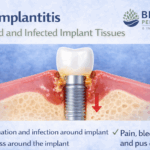
Illustration showing peri-implantitis with inflammation and bone loss around a dental implant, featuring the Britten Periodontics and Implant Dentistry logo.

Peri-Implantitis Symptoms You Should Never Ignore

A peri-implantitis symptom often appears quietly, which is why many patients don’t realize there’s a problem until damage has already begun. Peri-implantitis is an inflammatory condition that affects the gum tissue and bone around a dental implant, and early detection makes a major difference.

Common Peri-Implantitis Symptoms

One of the earliest warning signs is bleeding when brushing or flossing around an implant. In addition, the gums may appear red, swollen, or tender. A persistent bad taste or drainage around the implant can also indicate infection. These changes should never be ignored, even if pain is mild or absent.

Bone Loss Around the Implant

As the condition progresses, inflammation can lead to bone loss around the implant. This weakens the implant’s support and may cause it to feel loose. At this stage, a peri-implantitis symptom may include discomfort while chewing or changes in how the implant feels when biting down.

Why Peri-Implantitis Develops

Plaque buildup around implants plays a major role. However, a history of gum disease, smoking, diabetes, and irregular maintenance visits can increase risk. Because implants lack the same attachment fibers as natural teeth, infection can spread faster once it starts.

Why Early Treatment Matters

Without treatment, peri-implantitis can lead to implant failure and the need for removal. Early intervention may include deep cleaning, antimicrobial therapy, or laser treatment, depending on severity. Regular periodontal maintenance visits help reduce risk by catching changes early.

If you notice any bleeding, swelling, or changes around an implant, schedule an evaluation promptly. Addressing symptoms early helps protect your investment and your oral health long-term.

Back to Blog

appointment