
• (727) 586-2681
  • 1472 Jordan Hills Court, Clearwater, FL 33756

Dentistry

Diagram showing the stages of bone grafting for dental implants, including bone loss, bone graft placement, healing and integration, and implant placement in regenerated bone.

You may hear about bone grafting for dental implants if you’ve had missing teeth for a while. When a tooth is gone, the jawbone can shrink because it no longer gets stimulation from chewing. The goal of grafting is simple: rebuild support so future teeth replacements stay stable.

Why Bone Loss Happens

Bone responds to pressure and activity. However, when a tooth disappears, the body often reabsorbs some of that bone. Gum disease can speed this up, too. Therefore, even if you feel fine, you might have less bone than you expect.

How Grafting Helps

A graft places bone material in the area that needs rebuilding. Over time, your body integrates it and forms stronger support. In addition, grafting can improve facial contours and help the final implant crown look more natural. Meanwhile, your periodontist chooses the technique based on the size and location of the bone loss.

Healing and What You Can Do

Most patients report mild swelling and tenderness for a few days. So plan for soft foods, excellent oral hygiene, and follow-up visits. Also, avoid smoking, because it can slow healing. Your provider may recommend a membrane or biologic materials to support predictable results.

Not everyone needs grafting, but many people benefit from it. As a result, it can expand your treatment options and reduce the risk of implant complications. If you’re exploring implants and want a long-term solution, ask Britten Perio whether bone grafting for dental implants fits your plan.

You may hear about bone grafting for dental implants if you’ve had missing teeth for a while. When a tooth is gone, the jawbone can shrink because it no longer gets stimulation from chewing. The goal of grafting is simple: rebuild support so future teeth replacements stay stable.

Why Bone Loss Happens

Bone responds to pressure and activity. However, when a tooth disappears, the body often reabsorbs some of that bone. Gum disease can speed this up, too. Therefore, even if you feel fine, you might have less bone than you expect.

How Grafting Helps

A graft places bone material in the area that needs rebuilding. Over time, your body integrates it and forms stronger support. In addition, grafting can improve facial contours and help the final implant crown look more natural. Meanwhile, your periodontist chooses the technique based on the size and location of the bone loss.

Healing and What You Can Do

Most patients report mild swelling and tenderness for a few days. So plan for soft foods, excellent oral hygiene, and follow-up visits. Also, avoid smoking, because it can slow healing. Your provider may recommend a membrane or biologic materials to support predictable results.

Not everyone needs grafting, but many people benefit from it. As a result, it can expand your treatment options and reduce the risk of implant complications. If you’re exploring implants and want a long-term solution, ask Britten Perio whether bone grafting for dental implants fits your plan.

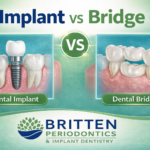
Dental implant compared to a natural tooth, showing how implants replace missing teeth and restore chewing function, featuring the Britten Periodontics and Implant Dentistry logo.

If you’re missing teeth, dental implants can restore function and confidence without relying on neighboring teeth for support. They feel secure because they replace the tooth root, not just the visible crown. So, you can chew, smile, and talk with more ease.

How Implants Work

An implant is a small post placed in the jawbone. After placement, the bone bonds with it during healing. Then a custom crown attaches on top. Unlike a bridge, an implant stands on its own. Therefore, you avoid shaving down healthy teeth to hold a replacement.

Who Makes a Good Candidate

Healthy gums and adequate bone support matter. However, many patients still qualify even if they have bone loss, because bone grafting can rebuild the area. In addition, medical conditions like diabetes do not automatically disqualify you, but they do require thoughtful planning. Meanwhile, smoking can slow healing, so your periodontist may recommend quitting or reducing use before treatment.

What to Expect During the Process

First, you’ll get imaging and a detailed exam. Next, your provider plans the placement for stability and aesthetics. After surgery, healing time varies, but most people manage well with simple aftercare and follow-ups. Finally, the crown is placed to match your smile.

With proper hygiene and routine maintenance, implants can last many years. As a result, they often become a “one-and-done” solution compared to options that need frequent replacement. If you want a long-term tooth replacement, ask Britten Perio about dental implants and a personalized plan.

Early signs of gum disease shown with healthy-looking gums and toothbrush, featuring the Britten Perio logo and educational text about bleeding, tender gums, and bad breath.

If you’ve noticed bleeding when you brush, you might be seeing the early signs of gum disease. Many people shrug it off as “brushing too hard,” but your gums rarely bleed for fun. The good news is that you can catch gum issues early and turn things around with the right care.

Bleeding, Puffiness, and Bad Breath

Healthy gums usually look pink and feel firm. However, inflammation can creep in quietly. For example, you may see redness along the gumline, swelling, or tenderness when you floss. Meanwhile, chronic bad breath can show up when bacteria collect under the gums. Also, if your gums pull away from your teeth, teeth can look “longer” even though they did not grow.

Changes You Can Feel

Sometimes the first clue is a feeling, not a look. Your bite may feel “off,” or you may notice sensitivity near the gumline. In addition, food trapping between teeth can increase if the gums lose their snug seal. Therefore, if something feels different for more than a week or two, it’s worth taking seriously.

What to Do Next

Start with the basics: brush gently twice a day, floss daily, and use an antibacterial rinse if your dentist recommends it. Still, home care cannot remove hardened tartar below the gums. So schedule an evaluation, especially if bleeding persists. At Britten Perio, we focus on diagnosing the cause and building a plan that fits your needs, whether that means a deep cleaning, targeted therapy, or a maintenance schedule.

Catching the problem early protects bone, saves teeth, and lowers the odds of bigger procedures later. As a result, acting on the early signs of gum disease can be one of the smartest moves you make for your mouth.

Welcoming Lauren to Britten Periodontics

A Warm Welcome to Our Team

We are excited to share the news as we focus on Welcoming Lauren to Britten Periodontics. Lauren recently reached her first 100 days with our practice, and she has already become a valued part of our team. From the start, her friendly demeanor and professionalism have made a meaningful difference for both patients and referring offices.

Lauren’s Role at Britten Periodontics

As our Scheduling Coordinator and Administrative Assistant, Lauren plays an essential role in keeping our practice running smoothly. She ensures appointments are scheduled efficiently while maintaining clear and compassionate communication. Additionally, her attention to detail helps create a seamless experience for everyone who contacts our office. Because of her positive approach, patients often feel welcomed before they even arrive.

A Commitment to Patient-Centered Care

Lauren’s kindness and dedication align beautifully with our practice values. She supports our clinical team while helping patients feel informed and comfortable throughout their journey. Meanwhile, her calm and organized style strengthens daily operations and enhances collaboration across the office.

You may notice Lauren pictured with her dog, Hopper, who reflects her warm and approachable personality just as well as she does.

Looking Ahead

As we continue Welcoming Lauren to Britten Periodontics, we are confident she will remain an integral part of our growth and success. We invite you to learn more about our team on our Meet the Team page and explore how we support patients through advanced care on our Periodontal Services page.

Please join us in welcoming Lauren—we are grateful to have her and look forward to many great years ahead.

Illustration of a gumline filling placed at the junction of tooth and gum to repair erosion or damage.

Gumline Filling: What It Is and Why You Might Need One

A gumline filling is a small but important dental restoration placed right where the tooth meets the gum. It’s often needed to repair damage caused by gum recession, aggressive brushing, or clenching—issues that expose the sensitive root surface.

Why Gumline Fillings Matter

When the protective enamel ends near the gumline, the softer root surface becomes vulnerable. Over time, this can lead to notching, sensitivity, or even decay. A gumline filling protects the area by sealing the exposed root and restoring structure.

Although we don’t place these fillings at Britten Periodontics, we frequently detect the need for them during exams. We collaborate with your restorative dentist to make sure the timing and placement support your overall treatment—especially if a tissue graft is involved.

When to Get a Gumline Filling

Sometimes, the filling is needed before a soft tissue graft to stabilize the area. Other times, it’s placed after grafting once the gum has healed. Every case is different, and a personalized plan is key.

Protecting Your Teeth and Gums

At Britten Periodontics, our role is to help safeguard both your teeth and gums. Learn more about our periodontal services and how we work with your general dentist for optimal care.

For additional information on dental restorations, check out the American Dental Association’s guide to fillings.

Animation showing bone loss in the posterior maxilla after tooth extractions without grafting.
This animation shows the posterior maxilla (the back part of the upper jaw) after multiple teeth have been extracted in one area – and what can happen without replacement or grafting.

What Happens to the Bone After Tooth Loss?

Posterior maxilla bone loss can occur after multiple tooth extractions in the back part of the upper jaw. When these teeth are lost and not replaced or grafted, the surrounding bone begins to resorb, leading to structural and functional issues.

Posterior Maxilla Bone Loss After Tooth Extractions

After tooth loss, the surrounding bone no longer receives stimulation from chewing. As a result, the body begins to resorb the unused bone. Over time, this leads to:

  • Shrinkage of the jawbone (resorption)

  • Expansion of the sinus into the space left behind (pneumatization)

  • Loss of structural support for adjacent teeth and facial contours

This process not only alters appearance but can also complicate future treatments such as dental implants.

Preventing Posterior Maxilla Bone Resorption

Fortunately, bone loss isn’t inevitable. At Britten Periodontics, we focus on preserving bone through proactive solutions like bone grafting and sinus augmentation. These treatments provide a stable foundation for implant placement and long-term oral health.

Moreover, understanding the early signs of posterior maxilla bone loss can help patients make informed decisions. If you’re facing tooth extractions or have already lost teeth, early consultation is key.

Take the Next Step

To learn more about your options, visit our services page. We’re here to help you protect your smile and preserve your bone structure for years to come.

Britten Periodontics logo promoting implant-supported teeth

Complete Your Smile with Implant-Supported Teeth

If you’re struggling with missing teeth or uncomfortable dentures, implant-supported teeth may be the solution you’ve been searching for. At Britten Periodontics, Dr. Britten offers a specialized approach to restoring smiles with comfort, function, and confidence.


What Makes This Treatment Different?

Unlike traditional dentures that rest on the gums, this modern treatment uses small titanium posts placed in the jawbone. These posts support your replacement teeth, creating a rock-solid foundation—no slipping, no messy adhesives, and no compromise on what you can eat.

This secure fit helps patients feel like they’ve gotten their natural teeth back, both in look and in function.


The Long-Term Benefits

Aside from boosting your smile’s appearance, this solution helps preserve the jawbone, which prevents the facial sagging that often follows tooth loss. Patients also enjoy improved speech and chewing without the stress of shifting dentures.

And with proper care, the results can last for decades.


What to Expect with Dr. Britten

Your journey begins with a thorough evaluation. Dr. Britten then designs a customized treatment plan based on your oral health and goals. After healing from the implant placement, your new teeth are attached with precision and care—bringing back not just your smile, but your confidence too.


If you’re ready to explore a secure, natural-looking solution that truly lasts, contact Britten Periodontics today to schedule your consultation.

Oral health self-care tips for all ages, including hygiene, fluoride use, diet, and dental visits.

Self-Care for Oral Health: Tips for a Healthy Mouth at Any Age

Maintaining good oral hygiene is a vital part of overall wellness. Practicing self-care for oral health involves daily habits that help keep your teeth, gums, and mouth in top condition. From brushing with fluoride toothpaste to visiting your dentist regularly, the right approach can preserve your smile for a lifetime.

Daily Habits Make a Big Difference

Start by brushing your teeth twice a day using fluoride toothpaste and drinking fluoridated water, if available. These simple actions prevent decay and protect your enamel. Don’t forget to floss daily to reduce plaque and keep gums healthy.

In addition, limit sugary foods and starches. A balanced diet not only supports your general health but also your oral health. Avoiding tobacco is essential—smokers are significantly more prone to gum disease. Alcohol should also be limited, as it dries the mouth and increases the risk of oral cancers.

Support for Caregivers

For older adults or those needing assistance, caregivers play a key role. Gently brush and floss their teeth using proper technique and ensure they rinse with water or a germ-fighting, alcohol-free mouthwash. Electric toothbrushes can make cleaning easier and more effective.

After meals, wipe away food particles and encourage rinsing. If resistance occurs, remain patient and consistent.

Don’t Skip Professional Dental Visits

No matter your age or dental status—even if you wear dentures—seeing a dental professional at least twice a year is crucial. These visits support self-care for oral health by detecting issues early and ensuring the mouth stays clean and healthy.

Dr. Britten uses gentle I.V. conscious sedation to ensure patient comfort in a relaxing dental setting.

Relax with Comfortable Dental Sedation at Dr. Britten’s Office

When it comes to dental care, your comfort is essential. At Dr. Britten’s office, we specialize in comfortable dental sedation that helps you feel calm and at ease throughout your procedure. From the moment you arrive, our warm and welcoming environment is designed to reduce anxiety and promote relaxation.

Gentle Sedation That Works for You

We offer I.V. conscious sedation, a safe and effective method that allows you to remain awake but deeply relaxed. Unlike general anesthesia, conscious sedation offers a quicker recovery time and fewer side effects. This means you can return to your day with minimal downtime.

Why Choose Dr. Britten?

Dr. Britten and his team understand that dental procedures can be stressful. That’s why we go above and beyond to make sure you feel secure and supported. Our team explains every step of the process so that you know what to expect. We believe that informed patients are more comfortable and confident.

Explore Your Sedation Options

Everyone’s needs are different. Whether you’re anxious about dental visits or undergoing a more involved procedure, we’re happy to discuss the sedation options that are right for you. We’re here to help you make the best decision for your health and peace of mind.

At Dr. Britten’s practice, comfortable dental sedation is more than a service—it’s a commitment to care. Relax… you’re in good hands.

Back to Blog

appointment

Categories