• (727) 586-2681
  • 1472 Jordan Hills Court, Clearwater, FL 33756

dental bridge

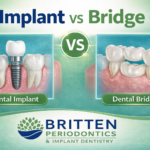
comparison of dental implant and dental bridge illustration

Dental Implants vs Bridge: What You Need to Know

Video courtesy of Spear Education

If you’re missing a tooth, understanding dental implants vs bridge options is essential before making a decision. While both treatments restore your smile, they function very differently. Therefore, choosing the right one depends on your long-term goals, oral health, and budget.

What Is a Dental Implant?

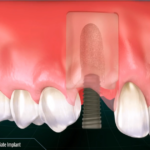
A dental implant is a permanent solution that replaces both the root and crown of a missing tooth. In addition, it integrates with your jawbone, helping maintain bone health over time. Unlike other options, implants do not rely on neighboring teeth for support.

Because of this, implants are often considered the gold standard in tooth replacement. According to Spear Education, implants provide superior durability and function compared to traditional methods.

What Is a Dental Bridge?

On the other hand, a dental bridge fills the gap by anchoring to adjacent teeth. As a result, those surrounding teeth must be reshaped to support the bridge. While this option can be quicker, it may compromise otherwise healthy teeth.

Which Option Is Right for You?

When comparing dental implants vs bridge, it’s important to consider longevity and oral health. Implants typically last longer and help prevent bone loss. However, bridges may be suitable for patients seeking a faster or more cost-effective solution.

For a deeper dive, check out this helpful video from Spear Education: https://www.speareducation.com

Additionally, you can explore more treatment options on our website: https://www.brittenperio.com/dental-implants/

Final Thoughts

Ultimately, there is no one-size-fits-all answer. However, with the right guidance, you can choose a solution that keeps your smile healthy and strong for years to come.

Britten Perio

It is unfortunate when someone loses a tooth, but there are usually several options to replace it.

  1. Removable Partial Denture
  • Worn during the day, can replace one or many missing. We recommend taking them out at night and soaking them in a cleaning solution.  teeth.  Sometimes a partial denture may need metal clasps to help it stay in the mouth.
  • Unfortunately, these metal clasps may be visible when speaking or smiling.
  • They can move a little when speaking or eating, which can be uncomfortable.
  • No need to file down any teeth.
  • This option is often the most economical.

2.  Temporary Partial Denture

  • A short term solution for a missing tooth.
  • We call it a “flipper” because it flips in and out easily.
  • This is used when the tooth will be restored in the future with a bridge or an implant, but is worn during the healing phase.
  • Much like a removable partial denture, but usually less sturdy, less bulky, and less expensive.
  • No alteration to adjacent teeth

3. Bridge

  • A bridge is a fixed solution that stays cemented in the mouth and does not come out.
  • This method involves cutting down the teeth on either side of the missing tooth to be able to connect them together.
  • We recommend floss threaders, which slide under the bridge, to keep it clean.
  • The disadvantages for bridges are cutting down teeth that might be perfectly healthy, and sometimes bridges in the lower jaw do not last as long since the jaw flexes and the unbendable bridge can spring a leak on one side or the other that allows for decay or bacteria to seep in.
  • A bridge can replace one or two missing teeth easily, and sometimes more if there is enough support.

4. Dental Implant

  • A great way to replace a missing tooth.
  • This solution feels and acts the most like a natural tooth when chewing, brushing or smiling.
  • The implant replaces the actual root of the missing tooth and heals in the bone for several months.
  • We then place an abutment, to which a crown will be cemented.
  • A major advantage is no need to alter any other teeth when placing an implant.
  • An implant is a great solution for a single missing tooth, and even more implants can replace many missing teeth.
  • When smiling or talking there is no way to tell the difference between an implant and a natural tooth

5. Do Nothing. There is always the option to do nothing.

  • When a tooth is removed, the bone melts away and the other teeth in the area will shift to fill the gap.
  • This can sometimes create a difficult place to clean and lead to other problems like bone loss or decay around the existing teeth.

Back to Blog

appointment