• (727) 586-2681
  • 1472 Jordan Hills Court, Clearwater, FL 33756

dental x-rays

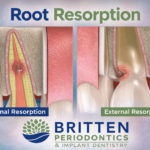
Photos showing root resorption in tooth

What Is Root Resorption?

Video courtesy of Spear Education

Root resorption is a condition where the body starts breaking down the structure of a tooth. While that sounds alarming, early detection can make a huge difference. In many cases, patients don’t notice symptoms right away, which is why routine dental visits matter.

There are two main types: internal and external. Internal starts inside the tooth, while external affects the outer surface. Both require professional evaluation to prevent further damage.


What Causes It?

Several factors can trigger this condition. For example, dental trauma, orthodontic movement, infections, or pressure from impacted teeth can all play a role. In some cases, the exact cause remains unclear.

However, regular monitoring helps catch changes early. According to the American Association of Endodontists, early diagnosis improves treatment outcomes significantly. Learn more here: https://www.aae.org/patients/dental-symptoms/root-resorption/


Signs You Shouldn’t Ignore

Although it often develops silently, some warning signs can appear. You might notice tooth sensitivity, discoloration, or mild discomfort. In more advanced cases, swelling or pain can occur.

Therefore, if anything feels off, don’t wait. A quick exam and imaging can reveal what’s happening beneath the surface.


Treatment Options

Treatment depends on the severity and type. In some cases, a root canal can stop the process. In others, surgical intervention may be necessary. The goal always stays the same: preserve your natural tooth whenever possible.

At Britten Perio, we focus on early detection and personalized care plans. If you want to understand how periodontal health connects to conditions like root resorption, check out our related blog: https://brittenperio.com/blog/gum-disease-and-tooth-health


Protect Your Smile

The bottom line is simple. Root resorption doesn’t have to mean tooth loss. With early care, you can protect your smile and avoid bigger issues down the road.

If it’s been a while since your last checkup, now is the time to schedule one. Your future smile will thank you.


Infographic showing different types of dental X-rays explained by Clearwater, Florida periodontist Dr. Todd Britten

Intraoral radiographs are the most common type of x-rays taken in dentistry. They include the first two (periapical and interproximal, or bitewing x-rays)

Periapical:  highlight one or two teeth at a time and include the entire length of each tooth from crown to root. We often use them to check for tooth or root problems, or infections at the tip of the root which may require root canal treatment. They can also provide valuable information about bone levels, periodontal ligament problems, and implant health.

Interproximal (bitewing): usually taken to check for bone levels or decay between the teeth. These are most often taken of the back teeth showing upper and lower premolars and molars.

Panoramic:  show the entire mouth on a single xray. The tube head circles behind your head while the film circles in front. Great for seeing impacted wisdom teeth, kids with mixed permanent and baby teeth, cysts in the jaw bone. Sometimes panoramic xrays can detect oral cancer, TMJ problems, sinusitis and even carotid artery blockages.

Occlusal: help highlight tooth development and placement in children. Each xray shows most of the full upper or lower arches. Used frequently by orthodontists.

Cephalometric:  show a person’s profile and the relationship of the teeth to the jaw. Used by orthodontists.

CBCT or Conebeam CT scan: provides a 3 dimensional image. Particularly helpful for helping with implant selection and placement.  Will sometimes detect root fractures and infections that are often undetectable in other films. They are also helpful to provide full mouth information, the TMJ joint and wisdom teeth.

Dr. Britten uses the Green CBCT scanner by VA Tech America which provides innovative technology for low-dose x-rays in 5.9 seconds and minimizes radiation to both patient and operator. It’s an open air scanner which is great for claustrophobic patients. This scanner not only allows for CT scans but also panoramic x-rays and bitewing-pano x-rays. “I have read thousands of CT scans of the jaws but I am still amazed at the fine details that I am now able to see.”

Questions? Contact us.

[iphorm id=”3″ name=”Contact form”]

Back to Blog

appointment