• (727) 586-2681
  • 1472 Jordan Hills Court, Clearwater, FL 33756

gum disease risks

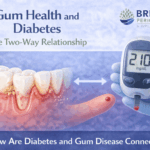
Illustration showing the two-way relationship between gum disease and diabetes, with inflamed gums connected to elevated blood sugar levels, featuring the Britten Periodontics and Implant Dentistry logo.

There’s a strong connection between gum disease and diabetes. Inflammation in the gums can make blood sugar harder to control, and high blood sugar can also increase infection risk in the mouth. So, managing one often helps the other.

Why Inflammation Matters

Gum disease creates chronic inflammation. Therefore, your body stays in a stressed state, which can affect insulin sensitivity. In addition, high blood sugar can reduce healing ability and increase bacterial growth. Meanwhile, dry mouth can worsen plaque buildup, which fuels more inflammation.

Signs to Watch For

Bleeding gums, bad breath, and gum tenderness may show up first. Also, if you notice gums pulling back or teeth feeling looser, take action quickly. For people with diabetes, even mild gum changes deserve attention because things can progress faster.

Smart Steps That Help

Start with daily habits you can keep: gentle brushing, consistent flossing, and cleaning between teeth. In addition, schedule regular professional cleanings and periodontal evaluations if your gums bleed. Also, keep your medical team in the loop, because stable blood sugar supports oral healing.

When your gums improve, many patients find it easier to maintain comfort and reduce infections. As a result, oral care becomes part of whole-body care, not a side quest. At Britten Perio, we coordinate treatment with a prevention mindset and clear home-care coaching. If you live with gum disease and diabetes, a tailored periodontal plan can make a real difference.


Illustration showing the link between gum disease and heart disease, highlighting inflammation in the gums connected to cardiovascular health.

The link between gum disease and heart disease has gained increasing attention in medical and dental research. Inflammation in the gums does not stay confined to the mouth. Instead, it can affect the entire body, including the cardiovascular system, especially when gum disease goes untreated.

What the Connection May Involve

Gum disease allows bacteria and inflammatory signals to enter the bloodstream more easily. Therefore, systemic inflammation can rise. In addition, people with gum disease may share risk factors with heart disease, such as smoking and diabetes. So, the relationship is complex, but it still matters.

Reducing Your Risk Through Oral Health Care

You can’t change genetics, but you can control daily habits. Brush twice a day, clean between teeth, and keep regular dental visits. Meanwhile, if your gums bleed, don’t “wait it out.” Bleeding often signals inflammation that needs professional care. Also, stop smoking if you use it, because it increases risk in both the mouth and the body.

When to See a Periodontist

If you have persistent bleeding, deep pockets, gum recession, or loose teeth, schedule an evaluation. A periodontist can measure gum pockets, review imaging, and build a plan to reduce infection. As a result, you lower the bacterial load and support healthier tissues.

At Britten Perio, we focus on prevention and stability because the mouth isn’t separate from the rest of you. Studies continue to explore the link between gum disease and heart disease, especially how chronic inflammation may contribute to cardiovascular risk. If you’re concerned about the link between gum disease and heart disease, start by getting your gums assessed and making a plan you can maintain.

Why Prevention Matters for Oral and Heart Health

Maintaining healthy gums may play a role in supporting heart health. Daily brushing and flossing help reduce plaque buildup and inflammation. In addition, regular professional cleanings allow dental providers to monitor gum health and address problems early. While treating gum disease does not replace medical heart care, reducing oral inflammation may lower overall inflammatory burden in the body. Coordinated care between dental and medical providers supports long-term wellness.

Back to Blog

appointment