• (727) 586-2681
  • 1472 Jordan Hills Court, Clearwater, FL 33756

tooth sensitivity

What Is Connective Tissue Grafting?

Video courtesy of Spear Education

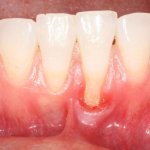
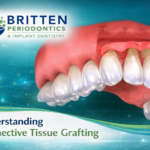
Connective tissue grafting is a proven procedure that restores gum tissue lost due to recession. When gums pull back, they expose sensitive tooth roots and increase the risk of damage. Fortunately, this treatment helps rebuild your gum line and protect your smile.

During the procedure, we take a small piece of tissue and place it where it’s needed most. As a result, your gums look healthier and function better.


Why Gum Recession Matters

Gum recession doesn’t just affect appearance. It can lead to sensitivity, decay, and even tooth loss if left untreated. Therefore, addressing it early makes a big difference.

Common causes include aggressive brushing, gum disease, and genetics. According to the American Academy of Periodontology, treating gum recession early improves long-term oral health outcomes. Learn more here: https://www.perio.org/consumer/gum-grafting


Benefits of Treatment

This procedure offers several advantages. First, it reduces tooth sensitivity by covering exposed roots. In addition, it strengthens the gum line and prevents further recession.

Most importantly, connective tissue grafting improves the overall look of your smile. Patients often notice a more balanced, natural appearance after healing.


What to Expect

The process is straightforward and comfortable with modern techniques. We focus on precision and gentle care to ensure the best results. Afterward, most patients recover quickly with minimal downtime.

At Britten Perio, we tailor every treatment to your needs. If you’re dealing with gum recession, you may also benefit from learning about periodontal disease and its impact: https://brittenperio.com/blog/what-is-gum-disease


Take the Next Step

Healthy gums support everything your smile needs to thrive. If you’ve noticed recession or sensitivity, now is the time to act.

Schedule a consultation and take control of your gum health today.
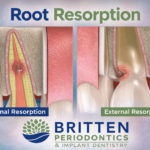
Photos showing root resorption in tooth

What Is Root Resorption?

Video courtesy of Spear Education

Root resorption is a condition where the body starts breaking down the structure of a tooth. While that sounds alarming, early detection can make a huge difference. In many cases, patients don’t notice symptoms right away, which is why routine dental visits matter.

There are two main types: internal and external. Internal starts inside the tooth, while external affects the outer surface. Both require professional evaluation to prevent further damage.


What Causes It?

Several factors can trigger this condition. For example, dental trauma, orthodontic movement, infections, or pressure from impacted teeth can all play a role. In some cases, the exact cause remains unclear.

However, regular monitoring helps catch changes early. According to the American Association of Endodontists, early diagnosis improves treatment outcomes significantly. Learn more here: https://www.aae.org/patients/dental-symptoms/root-resorption/


Signs You Shouldn’t Ignore

Although it often develops silently, some warning signs can appear. You might notice tooth sensitivity, discoloration, or mild discomfort. In more advanced cases, swelling or pain can occur.

Therefore, if anything feels off, don’t wait. A quick exam and imaging can reveal what’s happening beneath the surface.


Treatment Options

Treatment depends on the severity and type. In some cases, a root canal can stop the process. In others, surgical intervention may be necessary. The goal always stays the same: preserve your natural tooth whenever possible.

At Britten Perio, we focus on early detection and personalized care plans. If you want to understand how periodontal health connects to conditions like root resorption, check out our related blog: https://brittenperio.com/blog/gum-disease-and-tooth-health


Protect Your Smile

The bottom line is simple. Root resorption doesn’t have to mean tooth loss. With early care, you can protect your smile and avoid bigger issues down the road.

If it’s been a while since your last checkup, now is the time to schedule one. Your future smile will thank you.

Hypersensitive teeth by Dr. Todd Britten, Clearwater periodontist

Why Are My Teeth Sensitive to Cold?

One question we get asked often is why teeth might feel sensitive. The answer to this question depends on the ailment, as will the treatment.

To understand the answer to this question, it helps to know a little about the structure of your teeth. Each tooth consists of the crown, which is the visible part of the tooth, and the root, which anchors each tooth into your jaw. Components of the crown include:

  • Tooth enamel– The hard, white-looking layer that protects the sensitive inner parts of each tooth. Tooth enamel is the hardest material in your body – even stronger than bone.
  • Cementum– A thin, protective layer of bone-like tissue under the gum line that protects the tooth root.
  • Dentin– A layer of softer tissue which contains tiny canals or ‘tubules’.
  • Pulp– The soft tissue deep inside each tooth that contains blood vessels, connective tissue and nerves.

If for any reason the enamel starts to wear way or erode, your tooth’s dentin is exposed. When this happens, nerve signals pass to the tooth root and from there to the brain – meaning that things like eating popsicles or drinking hot drinks, which normally don’t cause a reaction, can suddenly trigger pain.

What Causes Sensitive Teeth?

A range of factors can lead to tooth sensitivity, but there are two main underlying reasons: enamel loss and gum recession.

Causes of enamel loss include: 

  • Over-zealous brushing:Brushing too vigorously or too often.
  • Acid erosion:From acidic foods and drinks such as sugary sports drinks and sodas.

Causes of gum recession include:

  • Using a hard bristle toothbrush– This can injure the gum tissue.
  • Gum disease– A common oral health disease that can cause receding gums.
  • Your genes– Regardless of how you care for your teeth, you may be genetically susceptible to gum recession.
  • Smoking– Tobacco products increase plaque build-up on teeth which over time can lead to a greater risk of gum recession.

Professional and at-home teeth whitening (bleaching) treatments may cause temporary sensitivity, although this should disappear within a short time of stopping treatment.

Ways to Keep Your Mouth Healthy

If you’re wondering how to manage tooth sensitivity or how to soothe a sensitive tooth, there are a number of ways:

  • Start using an over the counter toothpaste such as Sensodyne or your dentist may give you a prescription fluoride toothpaste with other minerals that can help.
  • Brush twice a day, every day. Brush gently with a soft-bristled toothbrush for four minutes each time to keep teeth and gums clean and healthy. We often recommend the Philips Sonicare powerbrush to our patients as it is safe and effective in cleaning around both the teeth and gums.
  • Floss daily, or use interdental aides such as softpicks or proxabrushes.Making cleaning between your teeth a part of your daily tooth care routine helps maintain healthy gums.
  • Visit your dentist regularly. Schedule checkups for every six months or more often, as advised by your dentist.

Oral hygiene instructions provided by Britten Periodontics in Clearwater, Florida
Many patients suffer from tooth hypersensitivity that can range from mild to severe, and from just one area or tooth to their whole mouth.
Dentin tubules that are open and exposed are a leading cause of tooth or root sensitivity to cold, touch, or dental visits.
Treatment options can vary per patient, with some in-office treatments or special products to be used at home daily, or a combination of both. The trick is to “plug” those open tubules with minerals and keep them as free from acids and plaque as much possible. Quite often, finding the right product or combination can produce immediate results
and provide instant relief!
Talk to your dental professional to decide the best treatment for tooth hypersensitivity which can make your daily activities and dental hygiene visits a lot more pleasant.
Mind-Blowing Facts About Smokers and Periodontal Disease explained by Britten Periodontics

Dr. Todd Britten performs the latest techniques in gingival grafting, or gum grafting, and other gum recession procedures to treat patients suffering from loose, sensitive teeth and receding gums in Clearwater, Florida. “Recent surgical innovations have made this procedure safer and more effective than ever before,” says Dr. Todd Britten.

Gum grafting involves carefully placing a small amount of new gum tissue in an area where little or no gum tissue currently exists to prevent further gum recession or to cover root surfaces of the teeth that have become exposed. A thin piece of tissue is taken from the roof of the mouth or gently moved over from adjacent areas to provide a stable band of attached gum tissue around the tooth. The tissue used in this procedure may be obtained from a variety of sources: an area of tissue nearby, the hard palate (roof of mouth), or donated tissue from another person, which has been medically processed. The gingival graft may be placed in such a way as to cover the exposed portion of the root, however, the main objective is to re¬establish the protective barrier or layer of the gum around the tooth. Occasionally, a patient may need multiple procedures to achieve the ideal amount of root coverage. The tissue is then delicately sutured (stitched) in place where it’s needed, using very fine suturing material.

Gum recession can occur for a variety of reasons, including genetics or age, oral trauma, and periodontal disease. Patients experiencing signs of gum recession are encouraged to seek treatment right away. Gum recession is not only a cosmetic problem – but it can also affect oral and periodontal health. A successful graft can reduce or eliminate problems like tooth sensitivity and further gum recession, as well as improve the aesthetics of a person’s smile. When a tooth loses the natural protection of healthy gum tissue, they become extremely sensitive to hot or cold temperatures, causing pain when drinking or eating, or even to cold air. Missing gum tissue also makes it easier for bacteria to penetrate the roots and cause decay — or for minor trauma to result in rapid gum recession. The eventual result is often tooth loss.

Dr. Britten offers a variety of modern and effective treatment options for receding gums in his Clearwater, Florida periodontal practice, including gum grafting procedures and the minimally invasive Pinhole® Surgical Technique. For more information on the progression of gum disease, scaling and root planing procedures, or periodontal surgical treatment options, contact us today at 727-586-2681. Britten Periodontics & Implant Dentistry is a periodontal practice offering patients personalized dental care in implant dentistry in Clearwater, Florida. Dr. Todd Britten received his Bachelor of Science & Doctorate of Dental Surgery from University of Florida, a Master’s Degree and Certificate in Periodontology and Implant Dentistry; and completed extensive training at the Institute of Advanced Laser Dentistry. He is one of the only board-certified periodontists in Pinellas County. He is a member of the American Academy of Periodontology, American Dental Association, Florida Association of Periodontists, Upper Pinellas County Dental Association, Hillsborough County Dental Association, Hillsborough County Dental Research Association and Florida West Coast Dental Association.

Be able to enjoy cold foods again with gum grafting procedures performed by Dr. Todd Britten, Clearwater, Florida periodontist.
Want to be able to eat ice cream again?
 
Tooth pain that you experience because of sensitivity to hot, cold, or acidic food or drink can be caused by decay, fractured teeth or worn fillings. But gum disease, causing exposed roots due to a receding gum line, along with with worn teeth or roots can also be the source of the problem.
 
Healthy teeth have a layer of enamel that protects the crowns of your teeth—the part you can see above the gum line. Below the gum line a layer called cementum protects the roots, and below the enamel and the cementum is dentin. Dentin contains microscopic tubules (small canals). If dentin loses its protective covering of enamel or cementum –or sometimes when gums recede — these tubules allow heat and cold or acidic or sticky foods to reach the nerves and cells inside the tooth. The result can be hypersensitivity.
 
Sensitive teeth can be treated in a variety of ways. Dr. Britten will recommend the appropriate treatment based on the cause of your sensitivity. Those might include:
 
– A de-sensitizing or prescription toothpaste containing minerals or compounds that help block transmission of sensation from the tooth surface to the nerve. Repeated applications (4 to 6 weeks) are usually necessary before the sensitivity is reduced.
 
– Application of a fluoride varnish or Kuraray desensitizing mineral powder, an in-office treatment which strengthens tooth enamel and reduces the transmission of sensations.
 
– Sometimes gum grafting is needed. This is a surgical procedure to protect the root and reduce sensitivity by replacing gum tissue that has been lost from the root.
 
Proper oral hygiene can often prevent tooth pain not caused by trauma.  Contact us today if you have any questions about your daily oral hygiene routine or concerns about tooth sensitivity. 
[iphorm id=”3″ name=”Contact form”]

Back to Blog

appointment