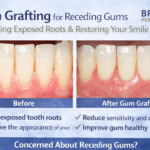
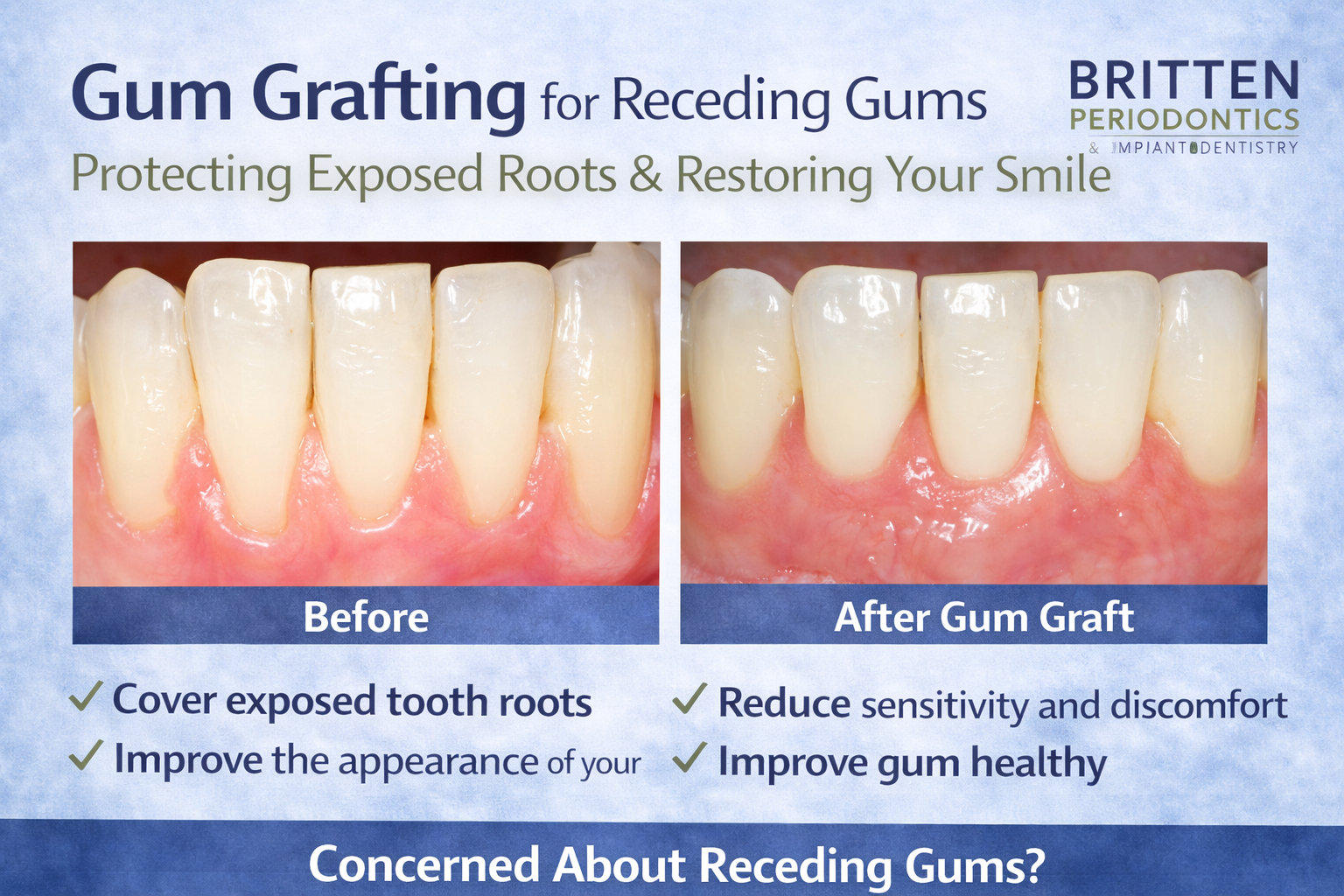
If cold drinks make you wince and your teeth look longer, you may need a gum grafting procedure. Gum recession exposes tooth roots, which can increase sensitivity and raise the risk of decay near the gumline. The good news is that grafting can protect the area and improve comfort.
Why Gums Recede
Recession can come from aggressive brushing, thin gum tissue, orthodontic movement, or gum disease. However, it often develops slowly, so many people miss it at first. Therefore, regular exams matter, especially if you notice new sensitivity or notches near the gumline.
How the Treatment Works
Your periodontist adds tissue where the gums have pulled back. This tissue may come from your palate or from a donor source, depending on your needs. Then the graft is secured so it can integrate and strengthen the gumline. Meanwhile, the goal isn’t just cosmetics. It’s protection, stability, and easier cleaning.
Recovery Tips That Actually Help
Expect mild soreness and swelling for a few days. So choose soft foods, avoid pulling on the lip to “check it,” and follow your cleaning instructions closely. In addition, keep your follow-up appointments, because small adjustments can make healing smoother. Also, switch to a soft-bristled brush and gentle technique to protect the result long-term.
When gums cover roots better, sensitivity often drops and brushing becomes more comfortable. As a result, patients frequently say they wish they’d done it sooner. If you want to stop recession from getting worse, ask Britten Perio if a gum grafting procedure is right for you.