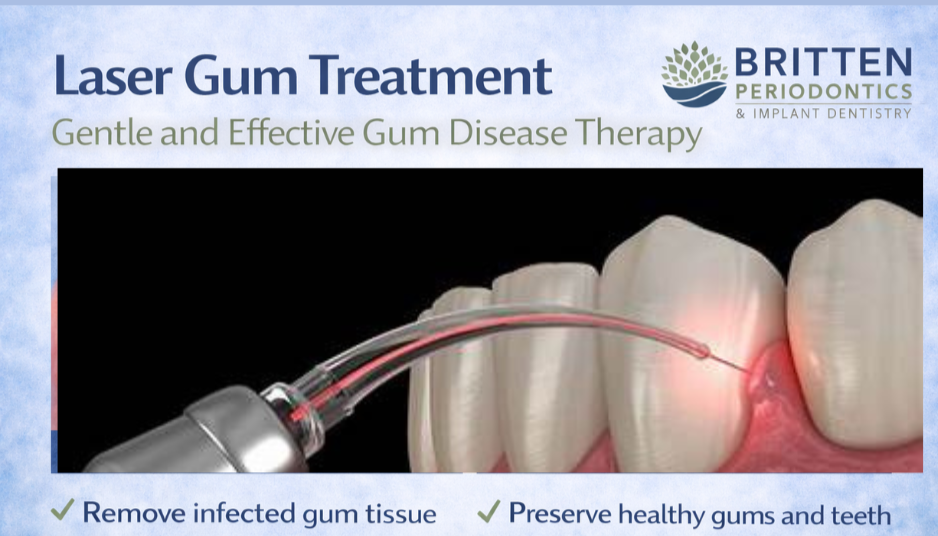
If you’ve heard about laser gum disease treatment, you may wonder if it replaces traditional care. Lasers can help reduce bacteria and inflamed tissue in certain cases. However, the best approach depends on your pocket depth, bone levels, and overall gum health.
What Lasers Can Do
Lasers can target infected tissue and disrupt bacteria. In addition, they may help reduce bleeding during treatment for some patients. Meanwhile, your provider can combine laser therapy with deep cleaning to improve gum healing. So, it often works as part of a plan, not as a magic wand.
What Lasers Cannot Do
Lasers do not “melt away” tartar that has hardened on teeth roots. Therefore, thorough scaling remains essential when calculus sits below the gumline. Also, if gum disease has caused significant bone loss, you may need additional therapies beyond laser use.
Who Might Benefit Most
Patients with mild to moderate periodontal pockets may see improvements when laser therapy complements conventional treatment. Meanwhile, patients who feel anxious about bleeding or sensitivity sometimes prefer it, although comfort varies by person. Your periodontist will evaluate your case and recommend what actually fits your mouth, not what looks shiny on a brochure.
The takeaway is simple: laser tools can help, but diagnosis drives results. As a result, the best next step is a periodontal evaluation with measurements and imaging. At Britten Perio, we match technology to your needs so you get predictable outcomes. If you’re considering laser gum disease treatment, ask what role it would play in your specific plan.