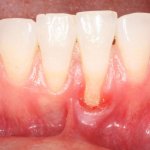
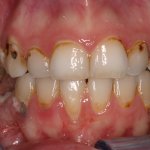
When you have periodontal disease, the supporting tissue and bone is destroyed, forming “pockets” around the teeth. Over time, these pockets become deeper, providing a larger space for bacteria to live. Traditionally, gum disease is treated by eliminating these gum pockets and creating a clean environment around the tooth so that the tooth or teeth can be retained rather than lost. The infected gum tissue is trimmed away and uneven bone tissue re¬contoured. Periodontal flap surgical therapy remains one of the most effective ways of treating gum disease.
For more information on the surgical procedures performed in our office, visit our website at:
“There’s more to your dental visit than just preventing or treating teeth or gum problems,” states Clearwater Periodontist Dr. Todd Britten. Dental professionals are also on the lookout for a number of potential soft tissue problems that could occur in or around your mouth. “There are many soft tissue conditions of the mouth that we evaluate for during a periodontal or general dental examination, but one of our biggest growing concerns is oral cancer,” says Dr. Britten.
In the last 10-15 years, a type of cancer affecting the head and neck has snowballed. That threat is human papillomavirus, or HPV. This cancer is often found on the tongue, mouth or throat and is caused by the human papillomavirus HPV type 16, which is the same high-risk HPV that causes cervical cancer.
An April 2017 data brief released by the Centers for Disease Control and Prevention (CDC) shows the prevalence of HPV of all types was 7.3% among U.S. adults ages 18 to 69. Four percent of that population carries the high-risk HPV.1
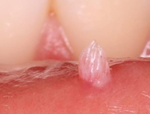
“Most types of oral HPV go away before they cause any health issues,” Britten says. He explains that if a patient develops oral warts, also known as an oral papilloma due to HPV, it can be removed by surgical removal, cryotherapy, which is where the wart is frozen, or interferon alfa-2B (Intron A, Roferon-A), which is an injection.
Although most people who are exposed to the virus clear it, the virus can remain persistent. “Those who are unable to clear it end up having a risk of developing the oral form of this cancer,” says Dr. Richard Jordan D.D.S., Ph.D, professor of Oral pathology, Pathology and Radiation Oncology, University of California San Francisco, who recently presented “HPV: An old foe in a new form” at the March 2017 American Academy of Dermatology (AAD) annual meeting in Orlando, Fla.
“Most of the people that have this virus persisting in their bodies probably picked it up 20 years ago, when they first become sexually active. The virus makes a home in their throats or tongues, sits there for 20 years and eventually develops into cancer in their 40s or 50s,” he says. “This is actually the same story as with the cervix in women… Most women get rid of the virus, but some are unable to clear the virus. They’re the ones that end up getting in trouble with cervical precancers.”
The number of people impacted by the oral cancer due to HPV is growing, but due to regular pap smears, cervical cancer rates have declined. Dr. Richards projects that by 2030 there will be more patients per 100,000 with mouth cancer due to HPV, compared to cervical cancer.
Dr. Todd Britten states that this leads us to believe that dental specialists such as restorative dentists, periodontists, and dental hygienists, who often see their patients for preventative or periodontal maintenance visits anywhere from every 3 to 6 months, are in the perfect position to screen for oral cancer in the hopes of catching it in its precancerous stages.
In under 30 seconds, your dental professional will scan the oral cavity for abnormalities. HPV disease mostly occurs in the tongue and in the tonsil region, so examining the tongue, the sides of the tongue and the base of the tongue and the tonsillar region. An oral cancer screening, including the HPV screening exam includes looking for an ulcer or an abnormal growth. “Patients should also do an at-home screening monthly using a flashlight, and report any sores or growths that seem unusual and do not go away by themselves in two weeks, or constantly reoccur,” says Dr. Todd Britten. If an abnormal growth is detected, Dr. Britten says he is able to perform some biopsies in his Clearwater Florida practice, and when necessary, refer to an oral surgeon.
Sometimes, infection with HPV in the oral cavity has no evidence of sores or growth. Early symptoms of oropharyngeal cancer include trouble swallowing, constant earaches, coughing up blood, unexplained weight loss, enlarged lymph nodes constant sore throats, lumps on the cheeks, growths or lumps on the neck, hoarseness or trouble speaking.
If you notice any of these symptoms and you know or think you may have HPV, make an appointment with your doctor immediately.
Treatment options are available for oral cancer caused by HPV. The treatment and prognosis depend on the stage and location of the cancer and whether or not it’s associated with HPV. Treatment for cancer caused by HPV can include radiation therapy, surgery, chemotherapy, or a combination of these. The good news is HPV-positive oropharyngeal cancers have better outcomes and fewer relapses after treatment than HPV-negative cancers.
Dr. Richard Jordan also reports that non-smokers respond very well to radiation treatment for HPV oral cancers, while unfortunately, smokers tend to have fairly aggressive disease and a poor five-year survival rate, according to Dr. Jordan.
“After five years, about 60% will be dead; about 40% will be alive,” he says. “HPV responds very well to currently available cancer therapies. If the patient doesn’t smoke, the five-year survival rate is extraordinarily high—at 80 or 90%.”
A periodontist is mainly concerned with diagnosing and treating soft tissue problems. Some soft tissue conditions include Lichen Planus, Benign Mucous Membrane Pemphigoid, Geographic Tongue, Burning Mouth Syndrome, Apthous Ulcers and Oral Mucositis from Chemotherapy, among many others. “Oral cancer screenings are part of our regular soft tissue evaluation,” says Dr. Britten. We work with the finest general dentists and oral surgeons to catch any irregular, precancerous or cancerous conditions in our patients’ mouths.
In the past, traditional dental x-rays were only able to provide limited information about the condition of a patient’s teeth and jaw bone. Advances in technology now allow us to see fine detailed tooth and jaw anatomy to diagnose conditions that may have been previously hard to detect. Britten Periodontics & Implant Dentistry is now offering the only dental 3D CT Scan that is FDA approved for use on pediatric patients as it delivers the lowest dose of radiation possible on both children and adults.
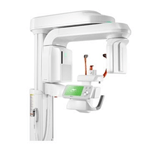
The VATECH PAX-i3D GREEN cone beam CT Scanner offers fantastic imaging detail and is the only cone beam system considered a “Green CT” due to its extremely low dose, equivalent to only a short time out in the sun. This technology also assists in the digital planning of dental implants for precise accuracy, safety and optimal results. It can also assist in planning for bone grafting, tooth extractions, particularly third molars (wisdom teeth) and suspected pathology such as infected cracked teeth or impacted teeth.
The Green CBCT scanner by VA Tech America provides innovative technology for ultra-low-dose x-rays in 5.9 seconds and minimizes radiation to both patient and operator.
“I am excited about not only the excellent image quality for diagnostic purposes, but also the increased protection for the health and safety of our patients. The VA Tech Cone Beam CT scanner is perfect for claustrophobic patients.” – Dr. Todd Britten. “I am excited about not only the excellent image quality for diagnostic purposes, but also the increased protection for the health and safety of our patients. The VA Tech Cone Beam CT scanner is perfect for claustrophobic patients, as it is an ‘open air’ scanner. Patients are positioned and stand very still, and in less than six seconds, the scan is done.”
Dentists and dental specialists are using ConeBeam 3-D CT scans more and more frequently as a diagnostic tool for ultimate treatment efficiency and precision, particularly for dental implants, however, they can provide information for full mouth treatment when needed or localized to third molars or even the Temporomandibular Joint. New Green CBCT technology allows your dentist or x-ray technician to select specifically the desired scan while managing radiation dosage to their patients.
“This is a very powerful treatment tool in our practice,” says Dr. Britten. “With it, we can work together with our referring dentists to more confidently map our surgical and restorative treatment plans and place and restore implants with accuracy, while protecting our patients and our staff with lower radiation. I have read thousands of CT scans of the jaws but am still amazed at the fine details that I am now able to see in our VA Tech scans. We often see hairline cracks in people’s teeth that were previously unclear on traditional x-rays, yet causing them discomfort.”
Are missing teeth causing you to miss out on life?
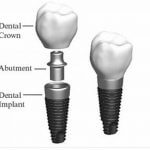
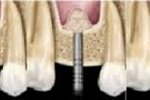
Don’t miss out on life because of missing teeth or loose dentures. Modern dentistry can replace everything from a single missing tooth to missing teeth in an entire section of the mouth. If you have questions about different dental implant options available, feel free to ask your dentist or dental specialist. Restoring your smile can help restore your confidence!
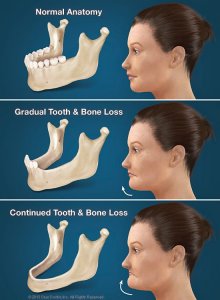
Stop the bone loss that can lead to premature aging!
Stop the bone loss that can lead to premature aging.
Losing one or more teeth can start a change of events that can affect both your physical health as well as your appearance, such as:
Gap in your smile
Loss of chewing function
Inability to eat a complete diet
Bone loss
Jaw bone atrophy
Prematurely age your face
The good news is: Tooth replacement with dental implants offers a solution to help prevent bone loss.
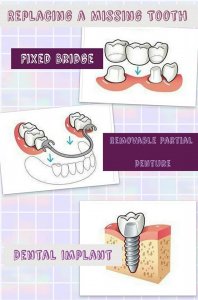
Tooth replacement options:
Crown and bridge and full or partial dentures can address the cosmetic problem of missing teeth, but cannot stop bone loss. A fixed bridge requires that two or more healthy teeth be ground down to serve as posts for a bridge. With implants, however, the other healthy teeth are left alone.
Dental implants transmit chewing forces to the jawbone, reducing bone loss. That’s why dental implants are now considered the standard of care for tooth replacement.
1) Brush your teeth twice a day with a fluoride toothpaste
While a seemingly simple statement, the guidance for brushing twice daily with a fluoride toothpaste weaves together a number of discrete components.Toothbrushing frequency
Review of the scientific literature, along with guidance from governmental organizations and professional associations found sufficient evidence to support the contention that twice-daily brushing, when compared with lower frequencies, was optimal for reducing risk of caries,2-4 gingival recession or periodontitis.5-7 It is important to recognize that in these studies, it was the frequency of tooth-brushing with a fluoride toothpaste that was evaluated rather than tooth-brushing alone.
Fluoride toothpaste
Although the measures used to assess the benefit varied, studies examining the effect of over-the-counter (OTC) fluoride dentifrice on caries incidence in children and adolescents found the fraction of caries prevented ranged from 16% per tooth to 31% per surface versus placebo or no dentifrice, and concluded that fluoride-containing toothpaste was effective in caries control.4, 8, 9 In addition, high level evidence shows that 5,000 ppm fluoride (available with a prescription) results in significantly more arrest of root caries lesions than use of OTC levels of fluoride (1,000 – 1,500ppm).10
Toothbrushing duration
Data examining the question of optimal duration of daily tooth-brushing encounters relies on plaque indices which are surrogate measures rather than direct measure of caries or gingivitis. Understanding that the use of surrogate measures decreases the certainty with which a recommendation can be made, the available systematic reviews found a brushing duration of two minutes was associated with bigger reduction in plaque than brushing for a single minute.11, 12 Two minutes per whole mouth can also be expressed as thirty seconds per quadrant or about four seconds per tooth.
2) Clean between your teeth daily
While cleaning between teeth is important to maintaining oral health, it is a concept that must overcome several barriers to adoption. ”Flossing” is often used as a shorthand, common term for interdental cleaning, which can become problematic in the real world where many report a strong distaste for that particular activity.13 Some people presume flossing as ineffective or unnecessary, which can also make it harder for them to adopt the daily habit. Flossing is a technique-sensitive intervention14 as exemplified by the disparity in benefit observed when comparing study designs involving self-flossing and professional flossing.15 Where patients do not see positive results from flossing, they may not continue to do so.
Using flossing as shorthand for interdental cleaning can also be problematic in that patients may be unaware of alternative devices that may be more pleasant or effective for them. A meta-review, which included the available devices developed for this purpose (i.e. dental floss, interdental brushes, oral irrigators, and woodsticks), addressed the question “What is the effect of mechanical inter-dental plaque removal in addition to tooth brushing on managing gingivitis in adults?” The strength of the evidence on the benefit ranged from weak to moderate depending on the device in question.16
Thus, there may not be one “best” interdental cleaning method; rather, the best method for any given patient may be one in which they will regularly perform. A guiding principle which is relevant to interdental cleaning is: “best care for each patient rests neither in clinician judgment nor scientific evidence but rather in the art of combining the two through interaction with the patient to find the best option for each individual.”17
3) Eat a healthy diet that limits sugary beverages and snacks
While eating a healthy diet is important for overall health and well-being, a review of the literature found little in terms of the effects of micronutrients on the risk of caries or periodontal disease. However, the conclusion of numerous systematic reviews on the effect of the macronutrient content of the diet, specifically of sugar, is that there is an association between sugar intake and caries.18-20 A review of the evidence supporting nine international guidelines recommending decreased consumption of sugar found consistent recommendations from all the groups while noting that they relied on different data and rationales.18
4) See your dentist regularly for prevention and treatment of oral disease
Viewed through the prism of the primary prevention of caries and/or gingivitis, a systematic review of the literature failed to arrive at consensus regarding optimal recall frequency to minimize either caries21, 22 or periodontal disease risk23 in part due to limited availability of studies addressing this topic. Nonetheless, in terms of the balance between resource allocation and risk reduction, it can be concluded that there is merit in tailoring a patient’s recall interval to individual need based on assessed risk of disease.21, 24
Previously, the ADA Healthy Smile Tips advised people to “Visit your dentist regularly.” However, dentists are doctors of oral health, which encompasses both the prevention and treatment of oral disease. The current recommendation goes a step further than its predecessor in articulating the duality of the dental visits.”
Dental implants are a great way to give you a beautiful and functional smile, they are not without limitations. Some patients could experience swelling or infection around their implants, which is known as peri-implantitis.
If you noticed a change in your implants, Dr. Todd Britten can provide a breakthrough procedure following the LAPIP® protocol.
How the Procedure Works
This procedure is minimally invasive, due to the use of cutting-edge, gentle laser technology. This allows Dr. Britten to treat peri-implantitis without the need for incisions. During the procedure, our state-of-the-art PerioLase laser targets the inflamed area of the gum tissue and eliminates harmful bacteria and infection that has developed. There is no need to worry about an extensive recovery period, sutures or any incisions.
The importance of eliminating unhealthy tissue
Even though dental implants are a great option for patients who have lost their teeth due to periodontal disease, the disease can still continue even around dental implants.
It is essential that diseased implants receive proper treatment as soon as possible to protect these implants, other teeth, bone structure and oral health.
If you think your gums might be inflamed around your dental implants, schedule an appointment with us today. Contact us today to learn more about the LAPIP® protocol and its many benefits to you and your oral health.
“Here in our Clearwater periodontal office, we have noticed that many young people and other patients feel that compared to traditional tobacco use, e-cigarettes are a safer and healthier option,” says Clearwater periodontist Dr. Todd Britten. “I see that companies selling these products are adding attractive and sweet flavoring products to attract young people. However, we are noticing in our dental practice that vaping may be as dangerous to oral health—if not more dangerous for the teeth and gums!”
Dr. Britten explained that E-cigarettes and vaporizers work by heating a liquid to generate aerosol, rather than smoke. The E-liquid in vaporizers and e-cigarettes are usually made up of propylene glycol, glycerin, flavorings, water, and in e-cigarettes, nicotine. One of the major ingredients used in vapes and e-cigarettes is a fluid called propylene glycol. “It is a like a thin sweet-tasting gel,” says Dr. Britten, “which when broken down becomes acetic acid, lactic acid, and propionaldehyde. We know in the dental community that acids are NEVER good for tooth enamel – that is what causes cavities!” Dr. Britten also explained that it is believed that the water molecules in saliva and the tissues of the mouth will bond to the propylene glycol drying the mouth and its tissues out considerable. “We know well in the dental community how harmful dry mouth is in the development of both cavities and gum disease!”
Another ingredient in e-liquid is a combination of vegetable glycerin as well as flavorings which studies have shown produces twice as much plaque on the teeth, which is also known as biofilm, and increased the stickiness of the bacteria to the teeth by about four times! This, he explained, means more cavity-causing bacteria to stick to the teeth and roots and can lead to severe tooth decay as well as an increase of gum disease.
“Even for those who may be quitting smoking by switching to e-cigarettes or vapes, unfortunately, it is not a safer alternative for the teeth and soft tissues inside the mouth,” Dr. Britten says. “Nicotine users using an e-cigarette may have lower concentrations of nicotine in their blood, but we really haven’t seen what vaping and e-cigarettes do to the body long-term.” But short-term, he says, dentists and dental hygienists are starting to see softer enamel, increased plaque and drier mouths with patients using these products. Which is not good for patients, because as Dr. Britten says, the plaque bacteria in the mouth cause gum disease and the combination of these bacteria and acid in the mouth, cause dental cavities.
Britten Periodontics & Implant Dentistry is a periodontal practice offering patients personalized dental care in implant dentistry in Clearwater, Florida. Dr. Todd Britten offers sedation dentistry, which can be very helpful for those needing advanced treatment, suffer from PTSD or have a fear of the dentist.
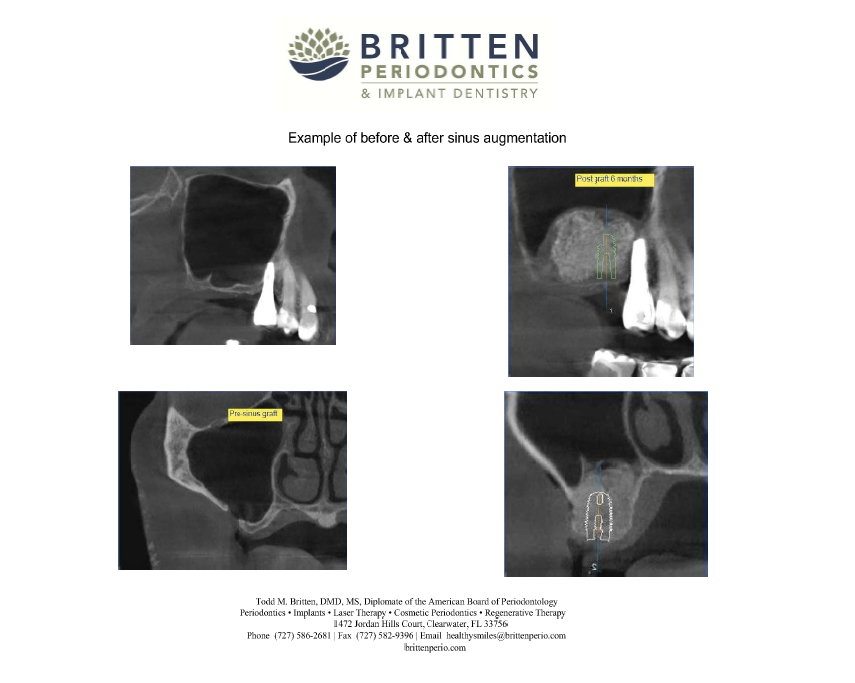
The maxillary sinus is a hollow chamber lined by pseudostratified columnar epithelial cells that make up the Schneiderian membrane. In a healthy sinus, mucous production helps clear the sinus of foreign particles and microbes. The base of the maxillary sinus often rests on the bone superior to the roots of the maxillary teeth.
The posterior maxilla consists of bone that is highly trabeculated and often has the lowest density in the mouth. While the mandibular bone can be as dense as oak wood, in comparison, the posterior maxilla can have the density of pine or even balsa wood. To further complicate matters, after the loss of the posterior teeth the maxilla resorbs in a palatal and superior direction, and the maxillary sinus elongates down to reduce the available native bone height.
These unique challenges in native bone availability combined with the higher occlusal forces in the posterior jaw lead to the posterior maxilla traditionally experiencing the highest dental implant failure rate. This is especially true when the limits are pushed, i.e. a very short implant is used with a long crown height. However, through innovation in bone augmentation techniques patients can have implant restorations in this region now with equal success rates to all other areas of the mouth. Sinus lift or augmentation surgery can assist implant placement by raising the sinus floor to develop more bone.
Two general techniques for a sinus augmentation exist. The first, called a crestal approach or indirect sinus “tap” involves drilling the planned implant osteotomy short of the sinus floor, then using an osteotome or other instrument to elevate the remaining bone, add additional bone graft in the site, then place the dental implant. This technique is appropriate for sites where 7+ mm of native bone remain before the procedure.
The second technique, called a lateral window or direct sinus graft, involves elevating a periodontal flap and creating an osteotomy window at the lateral aspect of the maxillary sinus in order to elevate the sinus membrane and add bone graft. This may be done as a separate procedure or together with placing the dental implant.
Between 5-8 months is expected for complete healing of the graft. The lateral window sinus graft is appropriate when 6 mm or less of native bone exist as seen on a CT scan. Both sinus augmentation techniques are most often done under conscious sedation in our office.
Since 2015, we have added L-PRF technology to all of our sinus grafts. Leukocyte-Platelet Rich Fibrin is derived from the patient’s own blood. A simplified chairside procedure results in the production of a thin, compressed layer of platelet rich fibrin that is strong, pliable and suitable for suturing. This natural fibrin network is rich in platelets, growth factors and cytokines that are derived from the blood platelets and leukocytes, improving not only bone growth but also natural infection defense. This is typically combined with a 50:50 mixture of bovine (cow) and human donor bone graft material. The results have been excellent! Our lateral window sinus grafts have shown a 98% infection free success rate in that time. Healing is typically easier than expected and many patients even report that their sinuses actually feel better and clearer than before the surgery!
If you or your team have any question about sinus augmentation procedures, please contact us at any time. As always, we are committed to continuing to work with all of you to provide our patients with the highest level of care available.
Dr. Todd Britten performs the latest techniques in gingival grafting, or gum grafting, and other gum recession procedures to treat patients suffering from loose, sensitive teeth and receding gums in Clearwater, Florida. “Recent surgical innovations have made this procedure safer and more effective than ever before,” says Dr. Todd Britten.
Gum grafting involves carefully placing a small amount of new gum tissue in an area where little or no gum tissue currently exists to prevent further gum recession or to cover root surfaces of the teeth that have become exposed. A thin piece of tissue is taken from the roof of the mouth or gently moved over from adjacent areas to provide a stable band of attached gum tissue around the tooth. The tissue used in this procedure may be obtained from a variety of sources: an area of tissue nearby, the hard palate (roof of mouth), or donated tissue from another person, which has been medically processed. The gingival graft may be placed in such a way as to cover the exposed portion of the root, however, the main objective is to re¬establish the protective barrier or layer of the gum around the tooth. Occasionally, a patient may need multiple procedures to achieve the ideal amount of root coverage. The tissue is then delicately sutured (stitched) in place where it’s needed, using very fine suturing material.
Gum recession can occur for a variety of reasons, including genetics or age, oral trauma, and periodontal disease. Patients experiencing signs of gum recession are encouraged to seek treatment right away. Gum recession is not only a cosmetic problem – but it can also affect oral and periodontal health. A successful graft can reduce or eliminate problems like tooth sensitivity and further gum recession, as well as improve the aesthetics of a person’s smile. When a tooth loses the natural protection of healthy gum tissue, they become extremely sensitive to hot or cold temperatures, causing pain when drinking or eating, or even to cold air. Missing gum tissue also makes it easier for bacteria to penetrate the roots and cause decay — or for minor trauma to result in rapid gum recession. The eventual result is often tooth loss.
Dr. Britten offers a variety of modern and effective treatment options for receding gums in his Clearwater, Florida periodontal practice, including gum grafting procedures and the minimally invasive Pinhole® Surgical Technique. For more information on the progression of gum disease, scaling and root planing procedures, or periodontal surgical treatment options, contact us today at 727-586-2681. Britten Periodontics & Implant Dentistry is a periodontal practice offering patients personalized dental care in implant dentistry in Clearwater, Florida. Dr. Todd Britten received his Bachelor of Science & Doctorate of Dental Surgery from University of Florida, a Master’s Degree and Certificate in Periodontology and Implant Dentistry; and completed extensive training at the Institute of Advanced Laser Dentistry. He is one of the only board-certified periodontists in Pinellas County. He is a member of the American Academy of Periodontology, American Dental Association, Florida Association of Periodontists, Upper Pinellas County Dental Association, Hillsborough County Dental Association, Hillsborough County Dental Research Association and Florida West Coast Dental Association.

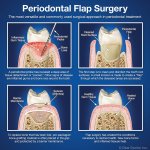

 [iphorm id=”3″ name=”Contact form”]