• (727) 586-2681
  • 1472 Jordan Hills Court, Clearwater, FL 33756

bleeding gums

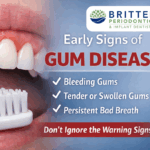
Early signs of gum disease shown with healthy-looking gums and toothbrush, featuring the Britten Perio logo and educational text about bleeding, tender gums, and bad breath.

If you’ve noticed bleeding when you brush, you might be seeing the early signs of gum disease. Many people shrug it off as “brushing too hard,” but your gums rarely bleed for fun. The good news is that you can catch gum issues early and turn things around with the right care.

Bleeding, Puffiness, and Bad Breath

Healthy gums usually look pink and feel firm. However, inflammation can creep in quietly. For example, you may see redness along the gumline, swelling, or tenderness when you floss. Meanwhile, chronic bad breath can show up when bacteria collect under the gums. Also, if your gums pull away from your teeth, teeth can look “longer” even though they did not grow.

Changes You Can Feel

Sometimes the first clue is a feeling, not a look. Your bite may feel “off,” or you may notice sensitivity near the gumline. In addition, food trapping between teeth can increase if the gums lose their snug seal. Therefore, if something feels different for more than a week or two, it’s worth taking seriously.

What to Do Next

Start with the basics: brush gently twice a day, floss daily, and use an antibacterial rinse if your dentist recommends it. Still, home care cannot remove hardened tartar below the gums. So schedule an evaluation, especially if bleeding persists. At Britten Perio, we focus on diagnosing the cause and building a plan that fits your needs, whether that means a deep cleaning, targeted therapy, or a maintenance schedule.

Catching the problem early protects bone, saves teeth, and lowers the odds of bigger procedures later. As a result, acting on the early signs of gum disease can be one of the smartest moves you make for your mouth.
Oral health by Dr. Todd Britten, Clearwater periodontist

What do Bleeding Gums Mean?

Problems such as bleeding gums can be a sign that your gumline is not being properly cared for and may need more attention. While you don’t need to panic if you notice that your gums bleed, you do need to take action to help prevent the progression to a more advanced form of gum disease. Most commonly, gingivitis (inflammation of the gums) is the result of plaque – a sticky film of bacteria forming on the teeth around the gumline or under the gums. Plaque bacteria can lead to gum disease, tooth decay, and even tooth loss.

The Most Common Cause of Bleeding Gums

In most cases, gums bleed because of the harmful plaque – and the millions of bacteria in it – found at or around the gumline being left to develop gingivitis. Gingivitis, the early, yet still reversible form of gum disease, may require treatment and an improved oral hygiene routine to help reverse it.

When gingivitis begins to cause irreversible damage to the gum tissues or bone, the diagnosis would be periodontitis, or periodontal disease.

How to Stop Bleeding Gums

There are many ways to help improve your oral health and keep your gums from bleeding. Since gingival bleeding is mainly due to inadequate plaque removal from the teeth at or around the gumline, starting an effective oral hygiene routine is a great way to help treat and prevent your gums from bleeding.

Brush at least twice a day: Make sure to brush the dentist-recommended two minutes every session to better remove any plaque that can lead to gum disease and tooth decay. Consider switching to an electric toothbrush like the Phiips Sonicare

Clean in between your teeth: Flossing, softpicks or using proxabrushes between your teeth at least once or twice a day is one of the most important ways to help prevent bleeding gums and maintain good oral health. It removes plaque and food particles that may be just under the gumline between the teeth, which is where gum disease often starts.

  • Avoid Tobacco: Tobacco use of all types can damage your gums and can also make you far more likely to develop gum disease.  ***Smoking can mask severe gum disease, as bleeding is minimal or non-existent in smokers, but the damage to the tissues is occurring faster, with the blood supply cut off to help the tissues heal. Also, tar builds up on the teeth and harbors even more harmful plaque bacteria.
  • See a Dental Professional Regularly: Harmful plaque bacteria can even lead to issues beyond gingivitis like weakened tooth enamel. Regular dental hygiene visits at your dentist or periodontist’s office will remove plaque and tartar that can’t be removed at home. This will help prevent gums from bleeding and keep your mouth healthy.
  • Maintain a Healthy Lifestyle: The American Dental Association (ADA) recommends eating a balanced diet and avoiding between-meal snacking. Also, reducing stress from your life can help prevent gum disease to keep your smile healthy.
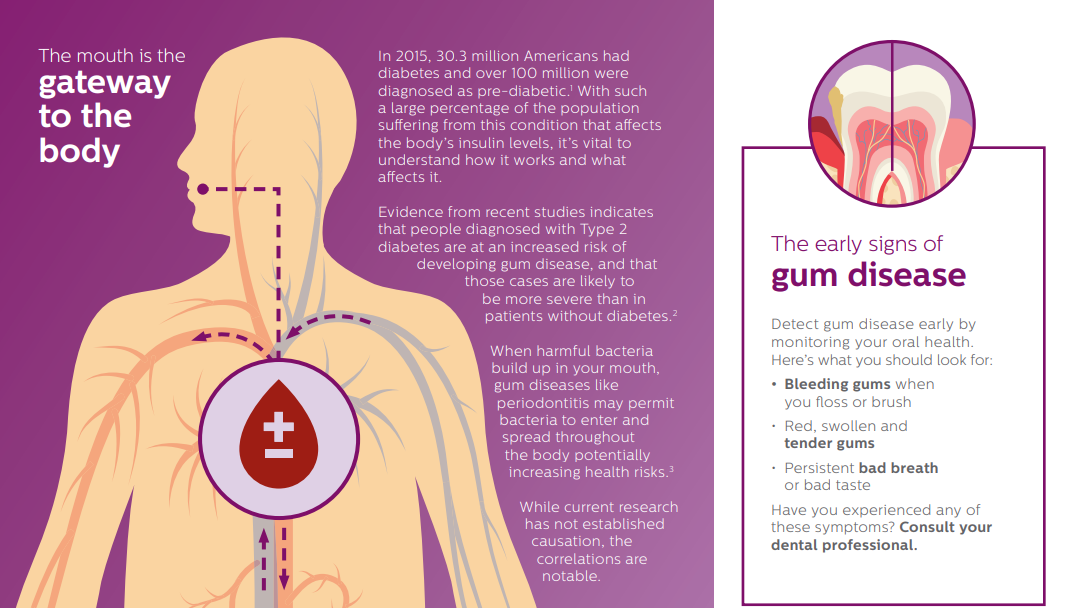
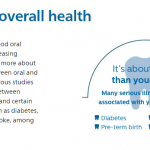
Illustration of how the mouth is the gateway to the body at Britten Periodontics in Clearwater, FL

Back to Blog

appointment

Categories