Dr. Todd M. Britten and the team at Britten Periodontics & Implant Dentistry held their 4th annual Free Dental Day for Veterans on November 9, 2018. The team at Britten Periodontics had overwhelming offers to help from many dental professionals in the community willing to donate their time and resources to provide free dental care. This year’s event was assisted by local family dentists and restorative specialists Dr. Jeffrey Ellenberg and Dr. Michael Podlusky. “Having local dentists involved enables us to provide more comprehensive care to our veterans,” Dr. Todd Britten said.
“The Community Dental Clinic in Clearwater helped us to coordinate this year’s event. We are so happy to help provide care for their patients who need to see a periodontist,” said one of Dr. Britten’s team members. “Once again this year, with the help of our restorative dentists, we were able to provide extractions, full dentures, fillings, dental implants, dental cleanings, x-rays and exams,” said another team member.
Air Force Veteran John Fallon was looking forward to his new smile, provided by Dr. Michael Podlusky who practices in Largo, Florida. When asked what the dental care provided by this event means to him, Fallon said, “Going out more, being able to talk to people and not running away because I get self-conscious with no teeth.”
Dr. Jeffrey Ellenberg of Clearwater, Florida, was helping in the care of Navy Veteran Ernest Bach. Bach said, “This Veteran’s Day is very special to me specifically because of the generosity of the dentists who are donating their time and talents to give this veteran a new perspective and the ability to socialize and participate as I once used to!”
Britten Periodontics & Implant Dentistry is a periodontal practice offering patients personalized dental care in implant dentistry in Clearwater, Florida. Dr. Todd Britten offers sedation dentistry, which can be very helpful for those needing advanced treatment, suffer from PTSD or have a fear of the dentist. For more information, contact us today:
Untreated gingivitis can advance to periodontitis and can eventually lead to tooth loss and other health problems.
GINGIVITIS
Gingivitis is the mildest form of periodontal disease. It causes the gums to become red, swollen, and bleed easily. There is usually little or no discomfort at this stage. Gingivitis is often caused by inadequate oral hygiene. Gingivitis is reversible with professional treatment and good oral home care.
Factors that may contribute to gingivitis include, diabetes, smoking, aging, genetic predisposition, systemic diseases and conditions, stress, inadequate nutrition, puberty, hormonal fluctuations, pregnancy, substance abuse, HIV infection, and certain medication use.
PERIODONTITIS
Untreated gingivitis can advance to periodontitis. With time, plaque can spread and grow below the gum line. Toxins produced by the bacteria in plaque irritate the gums. The toxins stimulate a chronic inflammatory response in which the body in essence turns on itself, and the tissues and bone that support the teeth are broken down and destroyed. Gums separate from the teeth, forming pockets (spaces between the teeth and gums) that become infected. As the disease progresses, the pockets deepen and more gum tissue and bone are destroyed. Often, this destructive process has very mild symptoms. Eventually, teeth can become loose and may have to be removed.
There are many forms of periodontitis. The most common ones include the following.
Aggressive periodontitis occurs in patients who are otherwise clinically healthy. Common features include rapid attachment loss and bone destruction and familial aggregation.
Chronic periodontitis results in inflammation within the supporting tissues of the teeth, progressive attachment and bone loss. This is the most frequently occurring form of periodontitis and is characterized by pocket formation and/or recession of the gingiva. It is prevalent in adults, but can occur at any age. Progression of attachment loss usually occurs slowly, but periods of rapid progression can occur.
Periodontitis as a manifestation of systemic diseases often begins at a young age. Systemic conditions such as heart disease, respiratory disease, and diabetes are associated with this form of periodontitis.
Necrotizing periodontal disease is an infection characterized by necrosis of gingival tissues, periodontal ligament and alveolar bone. These lesions are most commonly observed in individuals with systemic conditions such as HIV infection, malnutrition and immunosuppression.”
Most of our patients can tell the difference in how their teeth and gums feel when they switch to a power toothbrush. Dr. Britten and his team can also typically tell when a patient uses an electric toothbrush versus a manual toothbrush – as there is usually a noticeable difference in the amount of plaque present as well as a patient’s gum tissue tone and color.
Improving oral health will improve overall health, a reason most patients will be happy to make the extra investment for a powerbrush. An electric toothbrush (our favorite professional-grade brands typically run from $150-200) is only a fraction of what it costs to complete most dental procedures. In the end, investing in a good power toothbrush, changing brush heads every 90 days, and using the proper technique will save you money!
Why choose a powerbrush?
Power toothbrushes usually have built in features with an advantage for better oral health.
Timer – Many brands feature a timer to ensure patients brush for a full two minutes, and may also have a pressure indicator to pause brushing or to let patients know if they’re brushing too hard and possibly damaging their gums. The Phillips Sonicare, one of our favorites, hesitates every 30 seconds, to help a patient distribute their brushing in all four sections of the mouth.
More effectively disrupts and removes harmful bacteria in the mouth. The sonic vibrating or oscillating of bristles from an electric brush remove sticky plaque bacteria effectively and stimulate the gum tissue, reducing inflammation. Electrics brushes operate at 30,000 strokes per minute while a manual is only 200 strokes.
Simpler technique. With a power toothbrush, all you have to do is move the brush from tooth to tooth, spending a few seconds at a time. The professional line of powerbrushes from Phillips Sonicare are definitely our favorite because they can penetrate below the gum line to disrupt the bacterial environment formed by plaque. Other brands, most notably the Oral B have brush heads that oscillate in a half-circle motion to remove biofilm (plaque) from the tooth surface.
Gentle and safe at the gumline. Using a powerbrush with the correct technique will help prevent gum recession, enamel abrasion (wearing away) and tooth sensitivity from improper brushing as well as tooth decay and gum disease. Even with their phenomenal power, power toothbrushes such as the Sonicare are still very gentle on the teeth and gums. If patients have gum recession, they can just place the brush on the tooth without using a scrubbing action, which can traumatize and wear away more thin and delicate gum tissue.
Stain removal. Electric toothbrushes help with stain removal, which is attractive to patients who really want a bright, white smile. Some Sonicare models come with a “whitening” setting or even special polishing brush heads.
Helps those with dexterity issues. Elderly patients or others with dexterity issues can also benefit from electric toothbrushes. Many patients can’t move their hands the way they need to, so if they use a manual brush, they’re likely leaving plaque behind. Powerbrushes help remove plaque from the teeth for them, so as long as they get it close to where it needs to be, it’s going to remove plaque and help prevent problems.
Great for kids. Electric toothbrushes are also great options for children, especially if they have braces!
Less time brushing, with a better result! In two minutes, a power toothbrush will remove plaque and massage and stimulate gum tissue more effectively than the minimum of four minutes you would need to brush with a manual toothbrush.
Proper Technique for Effective Power Toothbrushing
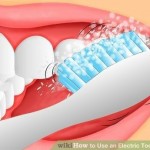
Divide your mouth into four quadrants. This can help ensure that you brush each section of your teeth and mouth cavity.
Place toothbrush bristles along gum line. Hold your toothbrush at a 45 degree angle to your gum line with a Sonicare or 90 degrees with an oscillating brush such as the Oral B. Applying gentle pressure, keeping the bristles in contact with your tooth surface and gum line, which can help ensure you get the most effective result possible. Stay on each area for a few seconds, moving the brush only when it is time to go to the next area. Once you’ve completed this procedure for a quadrant, move to the inner surfaces of your teeth and repeat the same procedure.
To brush behind your front teeth, tilt the brush vertically using only the front half of your brush. Clean biting surfaces, your tongue, and soft palate. This can help remove debris and other odor causing bacteria.
Tooth pain that you experience because of sensitivity to hot, cold, or acidic food or drink can be caused by decay, fractured teeth or worn fillings. But gum disease, causing exposed roots due to a receding gum line, along with with worn teeth or roots can also be the source of the problem.
Healthy teeth have a layer of enamel that protects the crowns of your teeth—the part you can see above the gum line. Below the gum line a layer called cementum protects the roots, and below the enamel and the cementum is dentin. Dentin contains microscopic tubules (small canals). If dentin loses its protective covering of enamel or cementum –or sometimes when gums recede — these tubules allow heat and cold or acidic or sticky foods to reach the nerves and cells inside the tooth. The result can be hypersensitivity.
Sensitive teeth can be treated in a variety of ways. Dr. Britten will recommend the appropriate treatment based on the cause of your sensitivity. Those might include:
– A de-sensitizing or prescription toothpaste containing minerals or compounds that help block transmission of sensation from the tooth surface to the nerve. Repeated applications (4 to 6 weeks) are usually necessary before the sensitivity is reduced.
– Application of a fluoride varnish or Kuraray desensitizing mineral powder, an in-office treatment which strengthens tooth enamel and reduces the transmission of sensations.
– Sometimes gum grafting is needed. This is a surgical procedure to protect the root and reduce sensitivity by replacing gum tissue that has been lost from the root.
Proper oral hygiene can often prevent tooth pain not caused by trauma. Contact us today if you have any questions about your daily oral hygiene routine or concerns about tooth sensitivity.