• (727) 586-2681
  • 1472 Jordan Hills Court, Clearwater, FL 33756

Dental Implants Cost

Dr. Britten offers affordable dental care in Clearwater with flexible payment plans and insurance support.

Making Dental Care Affordable in Clearwater

At Britten Periodontics, we understand that financial concerns often stand in the way of essential oral care. That’s why Dr. Britten believes that affordable dental care in Clearwater should be accessible to everyone. Our goal is to help you achieve excellent oral health without financial stress. We are committed to creating flexible solutions tailored to your needs.

Affordable Flexible Payment Plans Designed for You

We know every patient’s financial situation is different. That’s why we take the time to work with you one-on-one to design a payment plan that works for your budget. Whether you’re in need of a routine cleaning or more complex dental procedures, we’re here to support you every step of the way.

Transitioning into dental care should never be overwhelming. With us, it’s simple, supportive, and manageable.

Insurance Support and Affordable Payment Options

Navigating insurance can be confusing, but we’re here to help. As a courtesy to our patients, we file your insurance claims and assist in estimating the coverage you can expect from your provider. This way, you can focus on your health—not paperwork.

To further ease the process, we also accept most major credit cards, giving you more flexibility when it comes to payment options.

Your Smile, Your Investment

Everyone deserves a healthy, confident smile. At Britten Periodontics, we’re proud to make affordable dental care in Clearwater a reality. Let’s work together to remove the financial barriers to your best smile.

Contact us today to explore how our payment options can work for you—and start your journey toward a healthier, happier you.
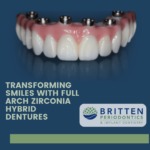
Hybrid dentures by Dr. Todd Britten at Britten Periodontics in Clearwater

Britten Periodontics & Implant Dentistry, a leading provider of advanced periodontics and dental implant solutions in Clearwater, Florida, is excited to announce the availability of Full Arch Zirconia Hybrid Dentures, the ultimate restoration option for patients suffering from severe tooth loss. This state-of-the-art dental treatment provides an unmatched combination of aesthetics, strength, and long-term functionality, revolutionizing the lives of patients who are looking for a permanent, secure solution to missing teeth.

What are Full Arch Zirconia Hybrid Dentures?

Full Arch Zirconia Hybrid Dentures are fixed implant-supported dentures made from zirconia, a highly durable and biocompatible material that mimics the look and feel of natural teeth. Designed for patients who need full arch restoration, this solution provides superior comfort, a natural appearance, and long-lasting stability compared to traditional removable dentures.

“We are proud to offer our patients a cutting-edge solution that restores not only their oral health but also their confidence and quality of life,” said Dr. Todd Britten, periodontist/owner at Britten Periodontics & Implant Dentistry. “Full Arch Zirconia Hybrid Dentures are a game-changer in dental restoration. They’re durable, aesthetically pleasing, and, most importantly, give our patients the peace of mind that comes with a permanent, fixed solution.”

The Benefits of Full Arch Zirconia Hybrid Dentures:
– Natural Look and Feel: Made from high-quality zirconia, these dentures closely resemble natural teeth, providing a lifelike smile and optimal comfort.
– Durability: Zirconia is known for its exceptional strength and longevity, making it resistant to chips and cracks.
– Permanent, Secure Fit: Unlike traditional dentures, these hybrid dentures are secured with dental implants, preventing movement, and ensuring a comfortable, secure fit.
– Improved Functionality: Patients can enjoy full chewing capacity, making it easier to eat and speak without discomfort.
– Biocompatibility: Zirconia is highly compatible with the body, reducing the risk of irritation or rejection.

Britten Periodontics & Implant Dentistry is a premier periodontic and dental implant practice dedicated to delivering advanced oral healthcare solutions. Our practice specializes in periodontics, implant dentistry, and full arch restorations, with a focus on improving the overall oral health and well-being of our patients. With a patient-centered approach, we strive to create a welcoming environment that ensures comfort, satisfaction, and long-term results.

For more information or to schedule a consultation, please visit www.brittenperio.com or contact us at 727-586-2681.

Clearwater periodontist Dr. Todd Britten at Britten Periodontics dental office

Advanced Techniques in Periodontal Surgery: Innovations for Improved Oral Health

In the ever-evolving landscape of dental care, advancements in periodontal surgery have transformed the way we approach the treatment of gum disease and related issues. From innovative technologies to refined surgical techniques, these advancements offer new hope for patients seeking improved oral health and wellbeing.

Laser Therapy: Precision and Efficiency

One of the most significant advancements in periodontal surgery is the widespread adoption of laser therapy. Laser-assisted procedures offer several advantages:

  • Precision: Lasers target diseased tissue with unparalleled accuracy, minimizing damage to surrounding healthy tissue.
  • Minimal Discomfort: Laser therapy is generally associated with less pain and discomfort compared to osseous surgery, reducing the need for anesthesia and post-operative medication.
  • Faster healing: The precise nature of laser therapy promotes faster healing times, allowing patients to resume their normal activities sooner.

Guided Tissue Regeneration: Restoring Function and Aesthetics

Guided tissue regeneration (GTR) is another advanced technique revolutionizing periodontal surgery. This procedure involves the use of barrier membranes to promote the regeneration of lost gum and bone tissues, ultimately restoring both function and aesthetics. Key benefits of GTR include:

  • Tissue Regeneration: GTR encourages the growth of new bone and gum tissue, reversing the damage caused by periodontal disease.
  • Preservation of Tooth Structure: By promoting tissue regeneration, GTR helps preserve the natural structure of the teeth and surrounding tissues.
  • Long-Term Results: With proper post-operative care, the results of guided tissue regeneration can be long-lasting, providing lasting benefits for patients.

Advancements in Dental Implant Surgery: Innovations for a Brighter Smile

Dental implant surgery has undergone remarkable advancements in recent years, revolutionizing the way we restore missing teeth and rejuvenate smiles. From improved materials to cutting-edge techniques, these innovations have advanced the safety, effectiveness, and aesthetics of dental implant procedures, offering new hope to patients seeking durable and natural-looking teeth replacements. Some of these advances include:

  • Enhanced Imaging: CBCT scans provide 3D images of the jawbone and surrounding structures, allowing for precise treatment planning and placement of dental implants.
  • Digital Impressions: Digital models allow for the creation of virtual models, helping for the design of custom-made implant restorations that blend seamlessly with natural teeth.
  • Improved surgical techniques which provide reduced trauma, faster recovery, and preservation of bone structure.
  • Advanced Materials: Significant improvements have been made resulting in implants that are stronger, more biocompatible , and more aesthetically pleasing.

Advanced techniques in periodontal surgery have transformed periodontal treatment with highly predictable, minimally invasive, and aesthetic treatment options for patients. As technology continues to evolve, the future holds even greater promise for periodontal and implant dentistry, paving the way for continued improvements in patient care and satisfaction.

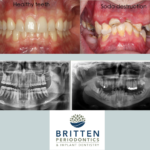
Healthy teeth versus soda-related enamel damage illustrated at Britten Periodontics with Dr. Todd Britten in Clearwater, FL

Soda Destruction in Kids & Teens

From ADA:  “It’s not just soda that’s contributing to an increase in tooth decay. Nationwide, students are drinking more sports drinks and fruit juices, which also contain high concentrations of sugar. The problem is with the frequency that a child’s teeth are exposed to sugar throughout the day. Nursing soft drinks significantly contributes to the development of tooth decay.

For example, if a student takes one small sip of soda, and then a minute later, takes another small sip, and then another sip—and this goes on during the course of one day—teeth are exposed over and over again to high concentrations of sugar and acid without any kind of break.

Even sugar-free soda is harmful to teeth because it contains high amounts of acid, leading to a breakdown in dental enamel. Because students typically do not brush their teeth during school hours, their risk of getting cavities increases dramatically.”

Benefits of Drinking Water:

“There are many benefits to drinking water:

  • Reduces muscle cramping and fatigue when consumed before, during, and after exercise.
  • Regulates body temperature. To sweat, you need plenty of water.
  • Helps you get well when you’re sick by controlling fever and replacing lost fluid.
  • Keeps you hydrated, alert, and energized. Even minor dehydration can cause a loss of concentration, fatigue, and irritability.
  • Prevents you from confusing hunger with thirst, which can help you control your weight.”

In the above picutre, we have both photos and x-ray images of a healthy mouth vs. a mouth that has had major decay caused by a soda drinking habit. Soda: It’s not hip to sip!

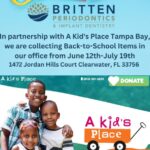
Britten Periodontics team sponsoring Clearwater community health event (Back to school)

Back to School Drive & Contest

Back to School Drive
WHAT: In partnership with A Kid’s Place Tampa Bay, we are collecting back-to-school items
WHEN: Collection Dates June 12th-July 19th.
WHERE: Drop off items at
Britten Periodontics & Implant Dentistry
1472 Jordan Hills Court
Clearwater, Florida 33756
Some suggestions & most-needed items are:
· Teenage backpacks & lunch boxes
· Gel pens
· Mechanical pencils
· Post-it Notes
· Flash Drives
Your supply donation will allow you to enter your guess for our BACK TO SCHOOL CONTEST!
Back to School Contest
Guess The Weight of Each Backpack in our reception area and enter to win a summer-themed gift basket!
Contest Rules:
· Must bring in school supplies to enter contest.
· 1 Guess per patient (with donation) per backpack
· Closest guess without going over wins
· If there is a tie, names will be placed in a hat and drawn
· Guesses end the last day of the school drive
Best,
Dr. Todd Britten & Staff
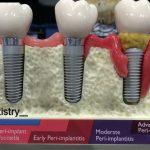
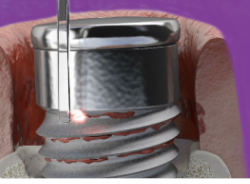
Peri-implantitis treatment at Britten Periodontics in Clearwater, Florida featuring advanced periodontal

What is Peri-Implantitis?

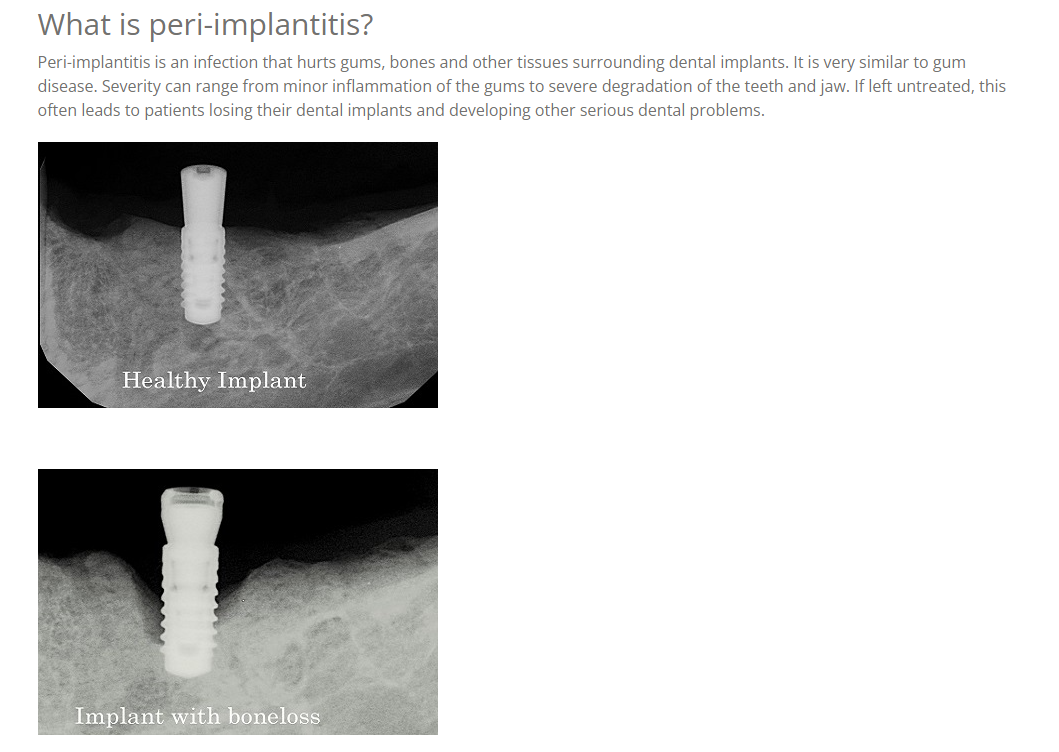
Peri-implantitis is an infection that hurts gums, bones and other tissues surrounding dental implants. It is very similar to gum disease. Severity can range from minor inflammation of the gums to severe degradation of the teeth and jaw. If left untreated, this often leads to patients losing their dental implants and developing other serious dental problems.

Peri-implantitis is caused by the bacteria and food particles that gradually accumulate around dental implants and gum lines. For this reason, peri-implantitis tends to grow unnoticed in its early stages. However, later symptoms can become severe. Ranging from minor to dangerous, symptoms include:

  • Redness and inflammation of the surrounding gum tissue.
  • Deepening of the gum pockets around the implant.
  • Exposure or visibility of the implant threads.
  • Loosening of the implant.
  • Pus discharging from the tissues around the implant.
  • Loss of supporting bone.
  • Bleeding upon being probed.
  • Swollen lymph nodes around the neck.

Peri-implantitis if left untreated can progress to severe stage and eventually lead to implant loss.  If caught early, and with adequate supervision from a competent dentist, peri-implantitis can be treated before it ever causes undue discomfort or embarrassment.

What is the cause of peri-implantitis?


There are three primary factors that influence your susceptibility to peri-implantitis:

  • Prior disease: patients affected by a disease that affects the whole body (known as systemic disease) can be extra susceptible to peri-implantitis. If you have diabetes or another systemic disease, consult with your dentist about your dental implants. Patients with periodontal disease can be at a higher risk to developing another mouth infection, like peri-implantitis.
  • Oral hygiene: If not cared for, plaque and tartar that are full of harmful bacteria and pathogens can easily build up around teeth and gums. These degrade tissue and cause irritation and infection. Other social factors can cause peri-implantitis, like smoking and drug abuse. What you put in your mouth affects your mouth; we advise extreme caution regarding what you place in your body.
  • Parafunctional habits: an easier term for this is “involuntary habit.” In this case, peri-implantitis is isolated to habits like involuntarily grinding your teeth in your sleep (bruxism), poorly positioning your teeth – either due to misalignment or poor muscle control – when the jaw is fully closed (malocclusion), nail biting and thumb sucking.

How can I avoid peri-implantitis?

Ways to avoid peri-implantitis:

  • Good oral hygiene:
  • Brush your teeth frequently (at least 2 x a day for 2 minutes with a powerbrush – Sonicare is preferred)
  • Use dental floss or other aides recommended by your dentist or dental hygienist, such as Proxysoft Bridge and Implant Floss or TEPE compact tuft brush.
  • If you suffer from any oral parafunctional habits (unconscious or involuntary habits with your mouth), like teeth grinding, poor jaw alignment or nail biting, seek help. Your dentist can provide several suggestions or treatments for these habits before they adversely affect your health.
  • Make sure you have a dental specialist perform dental implant surgery or to treat your peri-implantitis.  Periodontists are also implant specialists, with solid experience and advanced training in proper techniques.  Poor dental work can make your personal oral hygiene difficult and painful, and can expose you to pathogens later.If you are considering dental implants or if you feel you may have peri-implantitis, give us a call! You will receive excellent care. We want you to have a healthy mouth, and we know how to help you get it!

How is peri-implantitis treated?

Sometimes, surgical therapy is necessary to repair the damage from peri-implantitis.  Dr. Britten offers the latest technology in dental implant surgery, using both a “flap” type of procedure, or the use of  Laser Assisted Peri-Implantitis Protocol, or LAPIP. The LAPIP protocol uses a laser to target the bacteria that cause peri-implantitis without disrupting the stability of the implant itself. Using a laser, we can remove necrotic tissue, infection, anaerobes and other undesirables from the implant surface and surrounding periodontal structures.

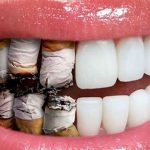
Harmful effects of smoking on teeth shown in patient image at Britten Periodontics in Clearwater, FL

Dr. Britten is highly concerned about his patients who smoke. The likelihood of developing advanced periodontal disease or gum disease can be up to six times higher in smokers. Periodontal disease is an extremely serious condition affecting not only the gums, but also the membranes and ligaments and bone supporting the teeth.

Many studies on smoking and periodontal disease have concluded that smokers have:

  • Deeper probing depths and a larger number of deep pockets in the gums.
  • More attachment loss including more gingival recession
  • More alveolar boneloss & tooth loss
  • Less gingivitis and less bleeding on probing
  • One of the major problems with smoking is that it tends to mask the damage being caused to teeth and gums. This damage can be difficult to detect, producing very few early warning signs of advanced periodontal disease.
  • For years it was thought that nicotine being a vasoconstrictor was causing less blood flow to the gums, causing less infection-fighting white blood cells to reach the area. Newer studies are showing that smoking appears to have a long-term effect on the inflammatory lesions, or diseased gums of smokers, which have less blood vessels in them than in non-smokers.
  • More teeth with furcation involvement (where the bone levels have been destroyed below the area where the roots of the teeth meet, leaving this area exposed, making it prone to further destruction as well as decay.
  • Additionally, nicotine affects saliva, causing it to become thicker so it is less able to wash away acid created after eating. As a result, heavy smokers can be more likely to suffer from tooth decay than non-smokers, even though they may practice good oral hygiene.
  • Smoking has a profound effect on the immune and inflammatory system. Smokers have more infection-fighting cells in their body, but fewer of these helpful cells make it into the gingival pocket. Studies also show that these good cells have a decreased ability to accomplish their function, which is to destroy harmful periodontal bacteria.
  • Adhesion molecules are found within smoker’s tissues, in the white blood cells, in the inflammatory lesions, and even in the supporting gingival tissues. Studies have shown impairment in defensive functions of other defensive blood cells, even those using smokeless tobacco due to the high concentrations of nicotine.
  • Smoking also impairs the healing of dental implants and even in the healing from all other aspects of periodontal treatment including non-surgical treatments (including scaling and root planing or “deep cleaning”), surgical treatment, bone grafting and tissue grafting.
  • Studies have shown that tobacco smoke and nicotine affect blood vessels in the gums, healthy bone-building cells, connective tissue matrix, the jaw bone and even the root surface itself. Tooth root surfaces in smokers have actually been shown to be contaminated by products of smoking such as nicotine, cotinine, acrolein and acetaldehyde, which may inhibit the gum tissue from healing around the roots of teeth as they should.
  • Smoking has been shown to affect human bone, and is a risk factor for osteoporosis, which is also a risk factor for periodontal disease.

As a periodontist, Dr. Britten is a specialist in treating advanced periodontal disease and is able to provide patients with the very latest techniques and treatments to help slow down this condition. Where teeth are lost then one option is to replace them with dental implants, but smoking is not advisable during this treatment because it does slow down healing.

If you do currently smoke and value your smile, it’s worth thinking about quitting.

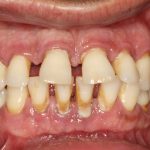
Educational graphic on periodontal disease treatment by Britten Periodontics in Clearwater, Florida

A team of international researchers published their findings in the Journal of Clinical Periodontology this month stating that patients with Gum Disease are more likely to have severe complications from COVID-19. 568 patients were studied and those with periodontitis – the most severe form of gum disease – were more likely to experience COVID‐19 complications. These complications included including death, ICU admission, and the need for assisted ventilation.

Dr. Todd Britten, a periodontist in Clearwater, Florida says that this study reinforces what he tells his patients every day – Oral health is extremely important for overall health. “This study, showing that patients with gum disease are at least three times more likely to have severe complications from the COVID-19 virus, shows us that treating and controlling periodontal disease remains extremely important, even in a pandemic.”

Dr. Britten stressed this study shows patients should still continue to see their periodontist or dentist. “Depending on your needs, your dentist or periodontist can treat gum disease infection through surgical or non-surgical therapy.” Dr. Todd Britten also said it is crucial that patients also keep dental hygiene cleaning visits to prevent gum disease and for those who have been treated for gum disease in the past stay on a 3 or 4 month schedule with their dental hygienist to avoid periodontal reinfection.

The findings also show the importance of good oral hygiene care at home during the COVID-19 pandemic, says Dr. Britten. According to the Academy of Periodontics, the nation’s leading organization of periodontists, “systemic inflammation is not only linked with periodontal disease, but to several other respiratory diseases as well.” Dr. James G. Wilson, President of the AAP states that this study linking periodontitis and COVID-19 complications, “Therefore, maintaining healthy teeth and gums in an effort to avoid developing or worsening periodontal disease is absolutely crucial in the midst of a global pandemic like COVID-19, which is also known to trigger an inflammatory response.” Dr. Britten states he emphatically agrees with the AAP.

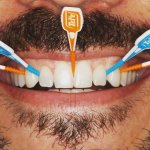
Oral hygiene instructions provided by Britten Periodontics in Clearwater, Florida

We encourage our patients to find ways to incorporate taking care of your teeth into your day, however you can! Even while watching Netflix, if that is what works for you!

“Interdental cleansing (cleaning between the teeth) is necessary for … optimal oral health. Since most toothbrushes have limited access to proximal (in between) surfaces of teeth… interdental cleansing must be included in dental hygiene care plans. Interdental spaces are areas where bacteria can accumulate, multiply and remain undisturbed.
Undisturbed plaque biofilm can cause gingival inflammation and bleeding and increase the risk for and progression of periodontal disease.” Source: “Interdental Cleansing” by Jacquelyn L. Fried, RDH, MS
Actually, cleaning between your teeth with floss, proxabrushes, softpicks, rubber tip stimulators and watching Netflix at the same time is just fine with us. Dr. Britten and his hygiene team encourage patients to find ways to incorporate taking care of your teeth into your day, however you can!
Clearwater periodontist Dr. Todd Britten at Britten Periodontics dental office

Traditionally, floss has been used to help remove the disease-producing bacteria in between the teeth. This bacteria cannot be reached with a toothbrush alone. Bacteria between the teeth is a primary cause for most gum disease and dental decay. It is so important to clean between your teeth every day!

Softpicks and interdental brushes (also known as proxabrushes) are available in many sizes and are gaining in popularity because they are easy to use, and for some patients – more effective than flossing alone!

And Dr. Britten (pictured above with his TEPE softpicks) is hoping for football season, and says “Go Gators”!

#brittenperio #clearwaterperiodontist

Back to Blog

appointment

Categories