• (727) 586-2681
  • 1472 Jordan Hills Court, Clearwater, FL 33756

gum disease treatment

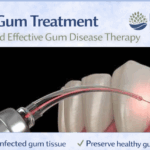
Dental laser used to treat infected gum tissue around teeth as part of laser gum disease treatment, featuring the Britten Periodontics and Implant Dentistry logo.

If you’ve heard about laser gum disease treatment, you may wonder if it replaces traditional care. Lasers can help reduce bacteria and inflamed tissue in certain cases. However, the best approach depends on your pocket depth, bone levels, and overall gum health.

What Lasers Can Do

Lasers can target infected tissue and disrupt bacteria. In addition, they may help reduce bleeding during treatment for some patients. Meanwhile, your provider can combine laser therapy with deep cleaning to improve gum healing. So, it often works as part of a plan, not as a magic wand.

What Lasers Cannot Do

Lasers do not “melt away” tartar that has hardened on teeth roots. Therefore, thorough scaling remains essential when calculus sits below the gumline. Also, if gum disease has caused significant bone loss, you may need additional therapies beyond laser use.

Who Might Benefit Most

Patients with mild to moderate periodontal pockets may see improvements when laser therapy complements conventional treatment. Meanwhile, patients who feel anxious about bleeding or sensitivity sometimes prefer it, although comfort varies by person. Your periodontist will evaluate your case and recommend what actually fits your mouth, not what looks shiny on a brochure.

The takeaway is simple: laser tools can help, but diagnosis drives results. As a result, the best next step is a periodontal evaluation with measurements and imaging. At Britten Perio, we match technology to your needs so you get predictable outcomes. If you’re considering laser gum disease treatment, ask what role it would play in your specific plan.
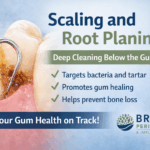

Scaling and root planing procedure shown cleaning below the gumline to remove tartar and bacteria, from Britten Periodontics

If your dentist recommended scaling and root planing, you’re not alone. This treatment sounds intense, but it’s simply a thorough cleaning that targets bacteria and tartar below the gumline. Think of it as pressing “reset” on irritated gums so they can heal.

Why a Regular Cleaning Isn’t Enough

A standard cleaning focuses on areas you can see and reach more easily. However, gum disease creates deeper pockets where bacteria hide. Over time, that buildup irritates the tissue and can damage the bone supporting your teeth. Therefore, a deeper approach helps stop the cycle before it gets worse.

What Happens During the Appointment

Your provider numbs the area so you stay comfortable. Then they remove tartar from above and below the gums and smooth the root surfaces. That smoothing matters because bacteria love rough surfaces. Meanwhile, you may get the treatment in sections, depending on how many areas need attention.

Recovery and Aftercare Tips

Afterward, you might notice mild soreness or sensitivity for a few days. So stick with gentle brushing and careful flossing. In addition, use any prescribed rinse or medication exactly as directed. Also, keep your follow-up visits, because healing gums need monitoring.

Most patients return to normal activities quickly. As a result, this treatment often reduces bleeding, swelling, and bad breath within weeks. If you want a clearer timeline and a plan that fits your mouth, a periodontal evaluation helps. At Britten Perio, we pair treatment with a maintenance schedule so you keep results long-term. Ultimately, scaling and root planing can be a turning point for healthier gums.

Back to Blog

appointment