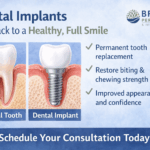
If you’re missing teeth, dental implants can restore function and confidence without relying on neighboring teeth for support. They feel secure because they replace the tooth root, not just the visible crown. So, you can chew, smile, and talk with more ease.
How Implants Work
An implant is a small post placed in the jawbone. After placement, the bone bonds with it during healing. Then a custom crown attaches on top. Unlike a bridge, an implant stands on its own. Therefore, you avoid shaving down healthy teeth to hold a replacement.
Who Makes a Good Candidate
Healthy gums and adequate bone support matter. However, many patients still qualify even if they have bone loss, because bone grafting can rebuild the area. In addition, medical conditions like diabetes do not automatically disqualify you, but they do require thoughtful planning. Meanwhile, smoking can slow healing, so your periodontist may recommend quitting or reducing use before treatment.
What to Expect During the Process
First, you’ll get imaging and a detailed exam. Next, your provider plans the placement for stability and aesthetics. After surgery, healing time varies, but most people manage well with simple aftercare and follow-ups. Finally, the crown is placed to match your smile.
With proper hygiene and routine maintenance, implants can last many years. As a result, they often become a “one-and-done” solution compared to options that need frequent replacement. If you want a long-term tooth replacement, ask Britten Perio about dental implants and a personalized plan.