Many patients feel confused when they hear they need more than a standard cleaning. Understanding regular dental cleanings vs periodontal maintenance helps explain why gum disease requires a different level of care.
What a Regular Dental Cleaning Covers
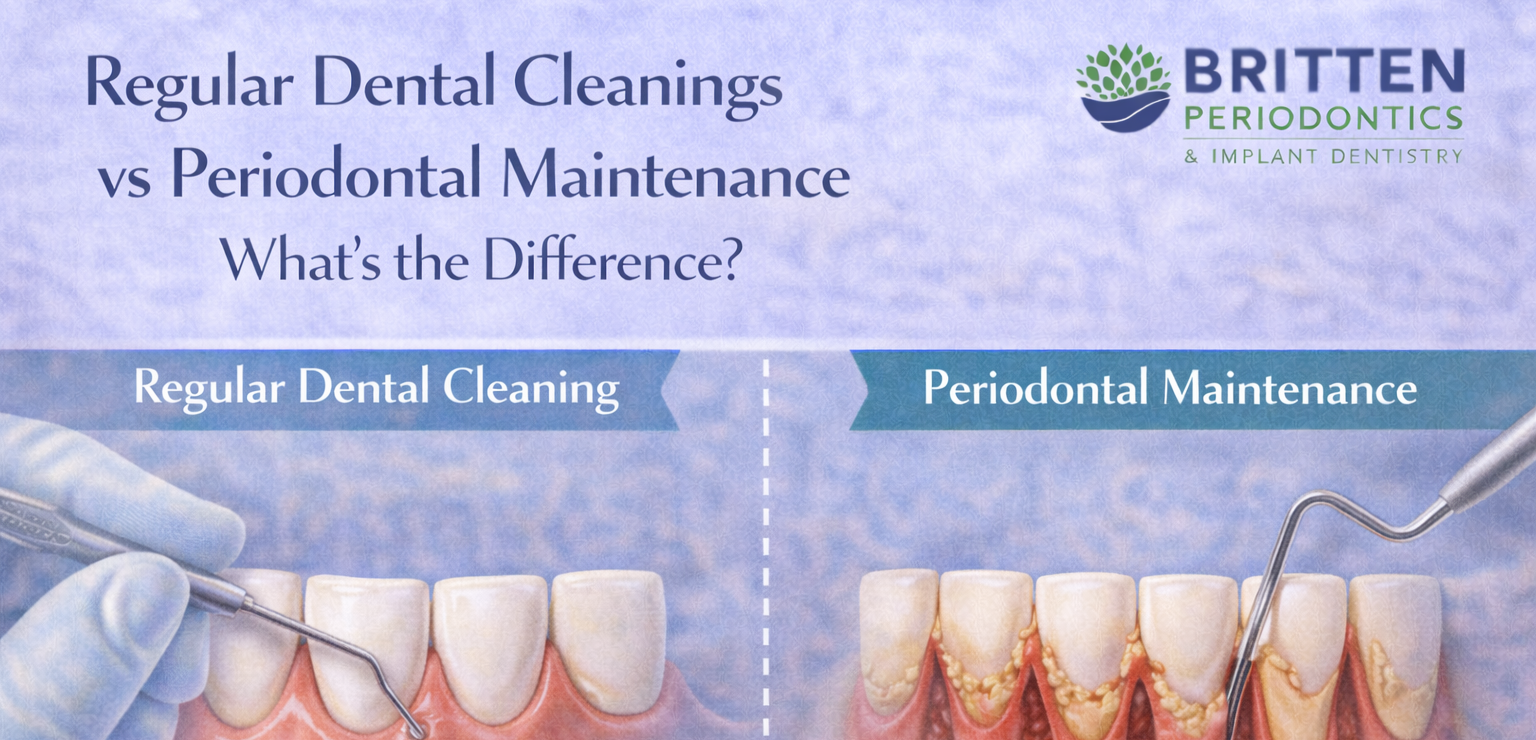
A routine dental cleaning focuses on plaque and tartar above the gumline. This type of visit works well for patients with healthy gums and shallow pocket depths. The goal is prevention and maintenance, not treatment of active disease. For patients without gum disease, this approach keeps teeth and gums in good shape.
Why Gum Disease Needs More
Once gum disease develops, bacteria move below the gumline. As a result, deeper pockets form where standard cleanings cannot reach effectively. Even excellent brushing and flossing cannot remove hardened tartar in these areas. Therefore, a different type of visit becomes necessary.
What Periodontal Maintenance Does Differently
Periodontal maintenance targets areas below the gums where disease tends to return. These visits include deeper cleaning, closer monitoring of pocket depths, and evaluation of inflammation or bleeding. In addition, your provider watches for early changes so treatment can be adjusted quickly.
Why Skipping Maintenance Causes Problems
Gum disease behaves like a chronic condition. Without consistent care, bacteria repopulate and inflammation returns. Over time, this can lead to bone loss, loose teeth, or infection around implants. Unfortunately, many patients feel fine while damage progresses quietly.
Choosing the Right Care for Long-Term Health
The difference between regular dental cleanings vs periodontal maintenance comes down to risk and history. Patients with past or current gum disease need ongoing support to protect their results. Periodontal maintenance helps stabilize gums, preserve bone, and reduce the need for future procedures.
If you’ve been told you need more than a routine cleaning, it’s not a punishment. It’s a plan designed to protect your smile long-term.