• (727) 586-2681
  • 1472 Jordan Hills Court, Clearwater, FL 33756

gum disease

The mouth is a window into the health of the body. It can show signs of nutritional deficiencies or general infection.

Functions of teeth

Food needs to be broken down and chewed before entering the digestive system so that our body can easily absorb nutrients from them.

Teeth can help us pronounce accurately.

Teeth can help us look better by giving us a good profile.

Baby teeth can reserve spaces for permanent teeth. Once the permanent teeth start to erupt, the deciduous teeth will fall out and give room for permanent teeth.

Watch this video from Spear Education​:

https://spearedu.co/QjIFQls


“Because of your smile, you make life more beautiful.”: Thich Nhat Hanh

Britten Perio discusses whether all dentures are created equal.

Sometimes, due to severe gum disease or decay, a person may lose all of their teeth. This as known as the fully edentulous patient.

Options for the fully ehttps://spearedu.co/9qD8aLpdentulous patient are:

Full dentures:
Dentures are worn during the day. This is used to replace one or many missing teeth.

Disadvantages
– They move a little when speaking or eating, which can be uncomfortable.
-Must come out at night and be placed in a cleaning solution.

Dental Implant
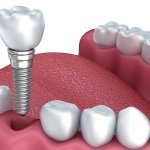
An implant is a great way to replace a missing tooth.

Advantages
This solution feels and acts the most like a natural tooth when chewing, brushing or smiling. A major advantage is no need to alter any other teeth when placing an implant. An implant is a great solution for a single missing tooth, and even more implants can replace many missing teeth. When smiling or talking there is no way to tell the difference between an implant and a natural tooth.

Disadvantages
The implant replaces the actual root of the missing tooth and heals in the bone for 3 to 7 months and we then begin the restorative phase. We or your dentist then place an abutment, to which a crown will be cemented. Dental implants are usually a more costly option, at least initially, but are often the best long-term investment.

Do Nothing
There is always the option to do nothing.

Advantages
Saves money, at least initially

Disadvantages
When a tooth is removed, the bone shrinks away and the other teeth in the area will shift to fill the gap. This can sometimes lead to other problems like shifting of other teeth, causing bone loss or decay around the existing teeth as they become more difficult to clean.

If you have questions about replacing any teeth lost to fractures, decay or gum disease, contact us today at 727-586-2681.

Here is a great video from Spear Education

https://spearedu.co/oSAZNEa

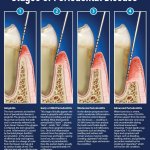
Educational graphic from Britten Perio providing valuable information about the different types of gum disease.

“TYPES OF GUM DISEASE (from Mouth Healthy.org)

Untreated gingivitis can advance to periodontitis and can eventually lead to tooth loss and other health problems.

GINGIVITIS
Gingivitis is the mildest form of periodontal disease. It causes the gums to become red, swollen, and bleed easily. There is usually little or no discomfort at this stage. Gingivitis is often caused by inadequate oral hygiene. Gingivitis is reversible with professional treatment and good oral home care.

Factors that may contribute to gingivitis include, diabetes, smoking, aging, genetic predisposition, systemic diseases and conditions, stress, inadequate nutrition, puberty, hormonal fluctuations, pregnancy, substance abuse, HIV infection, and certain medication use.

PERIODONTITIS
Untreated gingivitis can advance to periodontitis. With time, plaque can spread and grow below the gum line. Toxins produced by the bacteria in plaque irritate the gums. The toxins stimulate a chronic inflammatory response in which the body in essence turns on itself, and the tissues and bone that support the teeth are broken down and destroyed. Gums separate from the teeth, forming pockets (spaces between the teeth and gums) that become infected. As the disease progresses, the pockets deepen and more gum tissue and bone are destroyed. Often, this destructive process has very mild symptoms. Eventually, teeth can become loose and may have to be removed.

There are many forms of periodontitis. The most common ones include the following.

Aggressive periodontitis occurs in patients who are otherwise clinically healthy. Common features include rapid attachment loss and bone destruction and familial aggregation.
Chronic periodontitis results in inflammation within the supporting tissues of the teeth, progressive attachment and bone loss. This is the most frequently occurring form of periodontitis and is characterized by pocket formation and/or recession of the gingiva. It is prevalent in adults, but can occur at any age. Progression of attachment loss usually occurs slowly, but periods of rapid progression can occur.

Periodontitis as a manifestation of systemic diseases often begins at a young age. Systemic conditions such as heart disease, respiratory disease, and diabetes are associated with this form of periodontitis.

Necrotizing periodontal disease is an infection characterized by necrosis of gingival tissues, periodontal ligament and alveolar bone. These lesions are most commonly observed in individuals with systemic conditions such as HIV infection, malnutrition and immunosuppression.”

From Mouthhealthy.org (American Dental Association)

Healthy gums and braces by Britten Periodontics in Clearwater, Florida.

https://youtu.be/poEQjuLPCXE

If you have crooked teeth, you should schedule a visit to your dentist and ask about braces. Your dentist will likely send you to an orthodontist who will explain you in detail all the benefits of the treatment, the risks and the costs involved.

The number one reason people want braces is to have a beautiful smile. But crooked teeth are not only a cosmetic problem. It is also often a health problem.

Misaligned or crooked teeth can cause problems with your bite. Over time, a bad bite can hurt your teeth and gums by causing wear to the enamel, fractured or broken teeth, and contribute to periodontal disease. A bad bite can also  the jaw bone and the TMJ joint. sometimes leading to lots of other medical problems such as headaches or migraines.

In addition, when your teeth are positioned in the correctly in your mouth, this provides the comfort and the ease of being able to clean your teeth properly.

Make sure your gums are as healthy as they can be before orthodontic treament! Your gums are the tissue that help hold your teeth in place. If your gums are not in good shape, the stress of moving your teeth with braces cause him recession, bone loss and also impact tooth stability.

Dr. Todd Britten works cohesively with the orthodontists and general dentists to provide you with the best care possible. This way, you can be seen by a team of dentists that focuses on the area that they are trained and most skilled at and work together to provide the best care.

Please contact us today with any aspect of dentistry that concerns you. Our very knowledgeable staff would be happy to answer your questions! Contact us today 727-586-2681

[iphorm id=”3″ name=”Contact form”]
727-586-2681

Diabetes Awareness Month campaign by Britten Periodontics highlighting the link between diabetes and oral health.

Did you know?

Your dentist or dental hygienist may be able to tell if you have diabetes before you even know you do? Clues in the mouth, medical symptoms you are experiencing and reporting to them, and even a chairside test done right in the dental office can help your dentist determine that further testing for diabetes is necessary

A dentist can examine your mouth for clues of diabetes. There are signs in the mouth associated with diabetes:

-Periodontal disease
-Dental caries
-Burning mouth syndrome
– Oral candidiasis (common in those with poor glycemic control)
-Salivary dysfunction
-Neurosensory disorders
-Soft tissue abnormalities such as stomatitis or lichen planus
-Xerostomia
(Source: http://clinical.diabetesjournals.org/content/32/4/188.full)

Also, a patient that has 26% of periodontal pockets measuring 5 mm’s or greater or 4 or more missing teeth (not including the third molars), has a 72% chance of having a metabolic challenge. Diabetes is considered a metabolic disease.

Patients often see their dentist or dental hygienist more often than any other healthcare professional. Make sure to answer their questions thoroughly and accurately about your health.

Health risk factors for diabetes:

– Overweight or obese – BMI greater than 25
– High blood pressure
– Familial history of diabetes
– High cholesterol
– History of heart disease
– Other symptoms or complaints may include thirst, urinating frequently, constant fatigue, weight loss (Type 1), blurred vision, and uncontrolled infections even within the mouth (poorly controlled Type 2 diabetics).

Effective January 1, 2018, a chairside diabetes HbA1c (Hemoglobin A1c) test may be able to be performed by your dentist right in their office if they suspect diabetes or prediabetes. A patient with a test result of 5.7 or greater indicates a 92% chance the patient is metabolically challenged. At this point, your dentist can refer you to a physician for further testing.

Periodontal disease and diabetes have a direct effect upon one another. It is important to Dr. Britten to improve not only the oral health, but the overall health of each and every one of his patients. For more information on oral health and diabetes contact us at 727-586-2681.

[iphorm id=”3″ name=”Contact form”]

Diabetes Awareness Month campaign by Britten Periodontics highlighting the link between diabetes and oral health.

Did you know that 90% of pre-diabetics are unaware of their condition and 25% of Type II diabetics are unaware they have the disease? Many patients see their dentist or dental hygienist more often than they see their primary care physician. This is particularly true for people with periodontal (gum) disease, who require more frequent dental hygiene visits or gum treatments. Your dentist or dental hygienist should take a thorough medical history at each visit.  Some of the things they should look for which could indicate diabetes or prediabetes. Risk factors that indicate a potential for diabetes or pre-diabetes include:

  • Overweight or obese – BMI greater than 25
  • High blood pressure
  • Familial history of diabetes
  • High cholesterol
  • History of heart disease
  • Other symptoms or complaints may include thirst, urinating frequently, constant fatigue, weight loss (Type 1), blurred vision, and uncontrolled infections even within the mouth (poorly controlled Type 2 diabetics).

There are also dental clues that may indicate diabetes.

  • A patient that has 26% of periodontal pockets measuring 5 millimeters or more or 4 or more missing teeth (not including wisdom teeth), has a high chance of having a metabolic problem – and diabetes is a metabolic problem.
  • Periodontal disease
  • Dental caries
  • Burning mouth syndrome
  • Oral candidiasis (common in those with poor glycemic control)
  • Salivary problems or dry mouth
  • Neurosensory disorders
  • Soft tissue abnormalities such as stomatitis or lichen planus
  • Dry mouth

A chairside diabetes HbA1c (Hemoglobin A1c) test may soon be able to be performed in our practice, or if you have had a recent test with your doctor showing a result of 5.7 or greater indicates a 92% chance the patient is metabolically challenged. At this point, the patient should be referred to their physician.

If you are concerned about your oral health or are experiencing symptoms in your mouth or health that could be related to diabetes, contact us today 727-586-2681.

[iphorm id=”3″ name=”Contact form”]
Back to Blog

appointment