• (727) 586-2681
  • 1472 Jordan Hills Court, Clearwater, FL 33756

implant dentistry

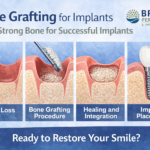
Diagram showing the stages of bone grafting for dental implants, including bone loss, bone graft placement, healing and integration, and implant placement in regenerated bone.

You may hear about bone grafting for dental implants if you’ve had missing teeth for a while. When a tooth is gone, the jawbone can shrink because it no longer gets stimulation from chewing. The goal of grafting is simple: rebuild support so future teeth replacements stay stable.

Why Bone Loss Happens

Bone responds to pressure and activity. However, when a tooth disappears, the body often reabsorbs some of that bone. Gum disease can speed this up, too. Therefore, even if you feel fine, you might have less bone than you expect.

How Grafting Helps

A graft places bone material in the area that needs rebuilding. Over time, your body integrates it and forms stronger support. In addition, grafting can improve facial contours and help the final implant crown look more natural. Meanwhile, your periodontist chooses the technique based on the size and location of the bone loss.

Healing and What You Can Do

Most patients report mild swelling and tenderness for a few days. So plan for soft foods, excellent oral hygiene, and follow-up visits. Also, avoid smoking, because it can slow healing. Your provider may recommend a membrane or biologic materials to support predictable results.

Not everyone needs grafting, but many people benefit from it. As a result, it can expand your treatment options and reduce the risk of implant complications. If you’re exploring implants and want a long-term solution, ask Britten Perio whether bone grafting for dental implants fits your plan.
You may hear about bone grafting for dental implants if you’ve had missing teeth for a while. When a tooth is gone, the jawbone can shrink because it no longer gets stimulation from chewing. The goal of grafting is simple: rebuild support so future teeth replacements stay stable.

Why Bone Loss Happens

Bone responds to pressure and activity. However, when a tooth disappears, the body often reabsorbs some of that bone. Gum disease can speed this up, too. Therefore, even if you feel fine, you might have less bone than you expect.

How Grafting Helps

A graft places bone material in the area that needs rebuilding. Over time, your body integrates it and forms stronger support. In addition, grafting can improve facial contours and help the final implant crown look more natural. Meanwhile, your periodontist chooses the technique based on the size and location of the bone loss.

Healing and What You Can Do

Most patients report mild swelling and tenderness for a few days. So plan for soft foods, excellent oral hygiene, and follow-up visits. Also, avoid smoking, because it can slow healing. Your provider may recommend a membrane or biologic materials to support predictable results.

Not everyone needs grafting, but many people benefit from it. As a result, it can expand your treatment options and reduce the risk of implant complications. If you’re exploring implants and want a long-term solution, ask Britten Perio whether bone grafting for dental implants fits your plan.
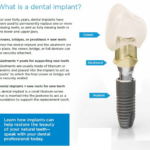
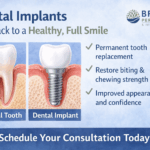
Dental implant compared to a natural tooth, showing how implants replace missing teeth and restore chewing function, featuring the Britten Periodontics and Implant Dentistry logo.

If you’re missing teeth, dental implants can restore function and confidence without relying on neighboring teeth for support. They feel secure because they replace the tooth root, not just the visible crown. So, you can chew, smile, and talk with more ease.

How Implants Work

An implant is a small post placed in the jawbone. After placement, the bone bonds with it during healing. Then a custom crown attaches on top. Unlike a bridge, an implant stands on its own. Therefore, you avoid shaving down healthy teeth to hold a replacement.

Who Makes a Good Candidate

Healthy gums and adequate bone support matter. However, many patients still qualify even if they have bone loss, because bone grafting can rebuild the area. In addition, medical conditions like diabetes do not automatically disqualify you, but they do require thoughtful planning. Meanwhile, smoking can slow healing, so your periodontist may recommend quitting or reducing use before treatment.

What to Expect During the Process

First, you’ll get imaging and a detailed exam. Next, your provider plans the placement for stability and aesthetics. After surgery, healing time varies, but most people manage well with simple aftercare and follow-ups. Finally, the crown is placed to match your smile.

With proper hygiene and routine maintenance, implants can last many years. As a result, they often become a “one-and-done” solution compared to options that need frequent replacement. If you want a long-term tooth replacement, ask Britten Perio about dental implants and a personalized plan.

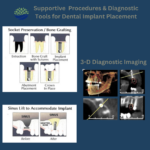
Supportive dental implant procedure performed by Clearwater periodontist at Britten Periodontics
🦷 Supportive Procedures & Diagnostic Tools for Successful Dental Implants! 🦷
 
At our practice, we go beyond just placing dental implants – we use advanced supportive procedures and diagnostic tools to ensure your treatment is precise, safe, and successful!
 
🔍 Comprehensive Diagnostics for Optimal Results
Using state-of-the-art technology like 3D imaging, CT scans, and digital X-rays, we can assess your bone health, the placement site, and the ideal positioning of your implants. This helps us create a personalized treatment plan that fits your needs perfectly!
 
🛠️ Supportive Procedures That Make a Difference
To ensure the best possible outcome, we offer a range of supportive treatments, including:
 
Bone Grafting: For patients with insufficient bone structure to support implants.
Sinus Lifts: To prepare the upper jaw for implants.
Guided Implant Surgery: Using advanced technology to ensure the perfect placement of your implants.
These tools and techniques help reduce risks, improve healing times, and ensure that your implants function like natural teeth for years to come.
 
💬 Ready to start your implant journey? Let’s schedule a consultation to discuss how our advanced diagnostic tools and supportive procedures can help you achieve a beautiful, lasting smile!
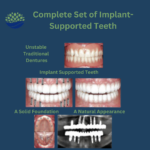
Smiling patient with implant-supported teeth from Dr. Britten

🦷 Complete Your Smile with Implant-Supported Teeth! 🦷

Missing several or even all your teeth? You’re not alone—and you definitely have options. Implant-supported teeth offer a game-changing, long-lasting solution that looks and feels like the real deal. At Britten Perio, Dr. Britten brings unmatched expertise in periodontal implant care to help patients eat, smile, and live more confidently.


What Makes Implant-Supported Teeth So Special?

Unlike traditional dentures, implant-supported teeth are permanently attached to dental implants placed in your jawbone. This creates a solid, stable foundation—no slipping, no awkward adhesives, and definitely no sacrificing your favorite foods.


Benefits That Go Beyond the Smile

Let’s talk perks:

  • Secure Comfort: You can finally ditch the denture glue.

  • Aesthetic Appeal: Custom-crafted to match your natural smile.

  • Better Function: Chew and speak like nothing’s missing.

  • Bone Preservation: Implants stimulate your jawbone to prevent bone loss.

  • Longevity: With proper care, they can last for decades—yes, decades!


What to Expect During the Procedure

Getting dental implants may sound intimidating, but it’s surprisingly straightforward. First, Dr. Britten evaluates your jawbone and oral health to ensure you’re a great candidate. Then, small titanium posts are placed in your jaw to serve as roots for your new teeth. After healing, the final restorations are securely attached, giving you a confident, natural smile that lasts.

And the best part? Most patients report minimal discomfort and a smooth recovery—far easier than they expected.

Ready to Love Your Smile Again?

Life’s too short to live without teeth you love. Whether you need a few or a full set, implant-supported teeth could be the solution you’ve been searching for. Contact Britten Perio today and let’s talk about your personalized path to a confident, complete smile.

Dental implant treatment by Clearwater, FL periodontist at Britten Periodontics

While regular brushing, flossing, and checkups allow many of us to maintain our natural smiles for a lifetime, sometimes our teeth just can’t keep up. If you’ve lost a tooth (or a few teeth) due to injury or disease, dental implants can rejuvenate both your smile and your oral health.

An implant is a synthetic tooth root in the shape of a post that is surgically placed into the jawbone. The “root” is usually made of titanium (the same material used in many replacement hips and knees), a metal that is well suited to pairing with human bone. A replacement tooth is then fixed to the post. The tooth can be either permanently attached or removable. Permanent teeth are more stable and feel more like natural teeth.

The ideal candidate for implants is a non­-smoker who has good oral health, including a sufficient amount of bone in the jaw and healthy gums with no sign of gum disease.

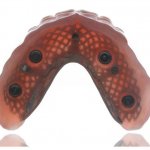
Hybrid dentures offered by Britten Periodontics in Clearwater, Florida, providing stable and natural-looking tooth replacement supported by dental implants.

If you’re tired of high maintenance and uncomfortable dentures, you might be able to have implants placed to support your denture. An implant-supported denture is used when a person doesn’t have any teeth in the jaw, but has enough bone to support implants. An implant supported denture snaps into place on dental implants. This prevents the denture from slipping or coming loose in the mouth. It also removes the need for denture paste or adhesives. The implant supported denture can be removed at night for cleaning or, if you have a fixed implant supported denture placed, your dentures will act as permanent teeth.

There are two types of implant supported dentures, bar-retained dentures and ball-retained dentures. Both types of dentures require two or more dental implants to be placed and both will provide you with a beautiful, natural smile.

Bar-Retained Dentures

In the bar-retained type of denture, three or more implants are surgically placed in the gums. Attached to these implants is a metal bar that runs along the gum line. The denture then rests on the metal bar and is attached using clips or other types of attachments. This type of implant-supported denture holds the denture in place without the steel studs used in ball-retained dentures.

Ball-Retained Dentures

Ball-retained dentures, also called stud-attachment dentures, use a ball-and-socket design to attach the dentures to the implants surgically placed in the gums. Traditionally, the denture is fitted with sockets and the implants have a ball on top of them. The denture and implants snap together where the ball and sockets meet.

Many patients prefer implant-supported dentures to traditional dentures because they alleviates much of the discomfort and rubbing of traditional dentures. The denture is held in place far more securely and is less likely to come loose. Dr. Britten is a dental implant specialist who can evaluate to see if you are a candidate for implant-supported dentures. Call us today 727-586-2681 or visit www.brittenperio.com

Back to Blog

appointment