• (727) 586-2681
  • 1472 Jordan Hills Court, Clearwater, FL 33756

periodontal care

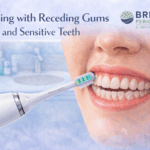
Illustration showing proper brushing technique with a Sonicare electric toothbrush for receding gums and sensitive teeth, highlighting gentle cleaning along the gumline, featuring the Britten Periodontics and Implant Dentistry logo.

If your gums have pulled back, your brushing technique matters more than ever. Brushing with gum recession requires a gentle approach that cleans thoroughly without grinding the gumline like it owes you money. The goal is to remove plaque while protecting fragile tissue and exposed roots.

Choose the Right Tools

Start with a soft-bristled toothbrush or an electric brush with a pressure sensor. We love the Sonicare by Philips. However, even a soft brush can cause damage if you scrub aggressively. In addition, use a fluoride toothpaste, and consider a sensitivity formula such as Sensodyne or a prescription toothpaste from your dentist such as Clinpro 5000 if cold drinks bother you.

Use a Gentle Technique

Angle the bristles toward the gumline and use small, controlled motions. Therefore, you clean where plaque collects without sawing away at the tissue. Meanwhile, avoid horizontal “back-and-forth” scrubbing, because it can worsen recession and wear notches into the teeth.

Don’t Forget Between the Teeth

Recession often increases spaces where food and plaque can trap. So floss daily or use interdental brushes and Soft-Picks if they fit comfortably. Also, a water flosser can help, especially around tight spots or dental work.

When Home Care Isn’t Enough

If recession progresses or sensitivity increases, you may need professional treatment. For example, a periodontist can evaluate bite forces, gum thickness, and inflammation and recommend targeted therapy or grafting if needed.

Small changes add up fast. As a result, improving technique can reduce irritation and protect your teeth long-term. At Britten Perio, we help patients tailor routines that actually work in real life. If you’re unsure whether you’re doing it right, ask for guidance on brushing with gum recession at your next visit.

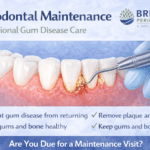
Periodontal maintenance visit showing professional cleaning around teeth and gums to prevent gum disease and maintain long-term oral health, featuring the Britten Periodontics and Implant Dentistry logo.

Gum treatment is a big step, but it’s not the finish line. Periodontal maintenance visits help keep infection from creeping back in. Gum disease behaves like a chronic condition, so ongoing care protects the work you already invested in.

Why Maintenance Is Different From a Regular Cleaning

After periodontal therapy, you may have deeper areas that need extra attention. Therefore, maintenance appointments focus on disrupting bacteria in places a standard cleaning may not fully address. In addition, your hygienist tracks pocket depths and bleeding to spot changes early.

What Happens at These Appointments

You’ll get a thorough cleaning above and below the gums, plus a review of home-care technique. Meanwhile, your team may recommend specific tools like interdental brushes or water flossers for tricky areas. Also, if pockets increase, your provider can adjust the plan quickly instead of letting problems build for months.

How Often Should You Go

Many patients do best every 3 to 4 months, especially right after treatment. However, frequency depends on risk factors like smoking, diabetes, genetics, and past bone loss. So your schedule should fit your mouth, not your neighbor’s.

Consistency matters because bacteria repopulate fast. As a result, skipping visits can undo progress quietly. At Britten Perio, we treat maintenance as prevention with a purpose: protect bone, stabilize gums, and keep teeth longer. If you’ve completed therapy, keep your periodontal maintenance visits on the calendar and your future self will thank you.

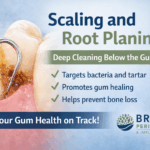
Scaling and root planing procedure shown cleaning below the gumline to remove tartar and bacteria, from Britten Periodontics

If your dentist recommended scaling and root planing, you’re not alone. This treatment sounds intense, but it’s simply a thorough cleaning that targets bacteria and tartar below the gumline. Think of it as pressing “reset” on irritated gums so they can heal.

Why a Regular Cleaning Isn’t Enough

A standard cleaning focuses on areas you can see and reach more easily. However, gum disease creates deeper pockets where bacteria hide. Over time, that buildup irritates the tissue and can damage the bone supporting your teeth. Therefore, a deeper approach helps stop the cycle before it gets worse.

What Happens During the Appointment

Your provider numbs the area so you stay comfortable. Then they remove tartar from above and below the gums and smooth the root surfaces. That smoothing matters because bacteria love rough surfaces. Meanwhile, you may get the treatment in sections, depending on how many areas need attention.

Recovery and Aftercare Tips

Afterward, you might notice mild soreness or sensitivity for a few days. So stick with gentle brushing and careful flossing. In addition, use any prescribed rinse or medication exactly as directed. Also, keep your follow-up visits, because healing gums need monitoring.

Most patients return to normal activities quickly. As a result, this treatment often reduces bleeding, swelling, and bad breath within weeks. If you want a clearer timeline and a plan that fits your mouth, a periodontal evaluation helps. At Britten Perio, we pair treatment with a maintenance schedule so you keep results long-term. Ultimately, scaling and root planing can be a turning point for healthier gums.

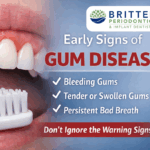
Early signs of gum disease shown with healthy-looking gums and toothbrush, featuring the Britten Perio logo and educational text about bleeding, tender gums, and bad breath.

If you’ve noticed bleeding when you brush, you might be seeing the early signs of gum disease. Many people shrug it off as “brushing too hard,” but your gums rarely bleed for fun. The good news is that you can catch gum issues early and turn things around with the right care.

Bleeding, Puffiness, and Bad Breath

Healthy gums usually look pink and feel firm. However, inflammation can creep in quietly. For example, you may see redness along the gumline, swelling, or tenderness when you floss. Meanwhile, chronic bad breath can show up when bacteria collect under the gums. Also, if your gums pull away from your teeth, teeth can look “longer” even though they did not grow.

Changes You Can Feel

Sometimes the first clue is a feeling, not a look. Your bite may feel “off,” or you may notice sensitivity near the gumline. In addition, food trapping between teeth can increase if the gums lose their snug seal. Therefore, if something feels different for more than a week or two, it’s worth taking seriously.

What to Do Next

Start with the basics: brush gently twice a day, floss daily, and use an antibacterial rinse if your dentist recommends it. Still, home care cannot remove hardened tartar below the gums. So schedule an evaluation, especially if bleeding persists. At Britten Perio, we focus on diagnosing the cause and building a plan that fits your needs, whether that means a deep cleaning, targeted therapy, or a maintenance schedule.

Catching the problem early protects bone, saves teeth, and lowers the odds of bigger procedures later. As a result, acting on the early signs of gum disease can be one of the smartest moves you make for your mouth.

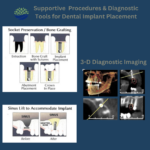
Supportive dental implant procedure performed by Clearwater periodontist at Britten Periodontics
🦷 Supportive Procedures & Diagnostic Tools for Successful Dental Implants! 🦷
 
At our practice, we go beyond just placing dental implants – we use advanced supportive procedures and diagnostic tools to ensure your treatment is precise, safe, and successful!
 
🔍 Comprehensive Diagnostics for Optimal Results
Using state-of-the-art technology like 3D imaging, CT scans, and digital X-rays, we can assess your bone health, the placement site, and the ideal positioning of your implants. This helps us create a personalized treatment plan that fits your needs perfectly!
 
🛠️ Supportive Procedures That Make a Difference
To ensure the best possible outcome, we offer a range of supportive treatments, including:
 
Bone Grafting: For patients with insufficient bone structure to support implants.
Sinus Lifts: To prepare the upper jaw for implants.
Guided Implant Surgery: Using advanced technology to ensure the perfect placement of your implants.
These tools and techniques help reduce risks, improve healing times, and ensure that your implants function like natural teeth for years to come.
 
💬 Ready to start your implant journey? Let’s schedule a consultation to discuss how our advanced diagnostic tools and supportive procedures can help you achieve a beautiful, lasting smile!
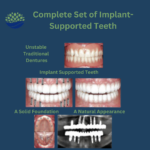
Smiling patient with implant-supported teeth from Dr. Britten

🦷 Complete Your Smile with Implant-Supported Teeth! 🦷

Missing several or even all your teeth? You’re not alone—and you definitely have options. Implant-supported teeth offer a game-changing, long-lasting solution that looks and feels like the real deal. At Britten Perio, Dr. Britten brings unmatched expertise in periodontal implant care to help patients eat, smile, and live more confidently.


What Makes Implant-Supported Teeth So Special?

Unlike traditional dentures, implant-supported teeth are permanently attached to dental implants placed in your jawbone. This creates a solid, stable foundation—no slipping, no awkward adhesives, and definitely no sacrificing your favorite foods.


Benefits That Go Beyond the Smile

Let’s talk perks:

  • Secure Comfort: You can finally ditch the denture glue.

  • Aesthetic Appeal: Custom-crafted to match your natural smile.

  • Better Function: Chew and speak like nothing’s missing.

  • Bone Preservation: Implants stimulate your jawbone to prevent bone loss.

  • Longevity: With proper care, they can last for decades—yes, decades!


What to Expect During the Procedure

Getting dental implants may sound intimidating, but it’s surprisingly straightforward. First, Dr. Britten evaluates your jawbone and oral health to ensure you’re a great candidate. Then, small titanium posts are placed in your jaw to serve as roots for your new teeth. After healing, the final restorations are securely attached, giving you a confident, natural smile that lasts.

And the best part? Most patients report minimal discomfort and a smooth recovery—far easier than they expected.

Ready to Love Your Smile Again?

Life’s too short to live without teeth you love. Whether you need a few or a full set, implant-supported teeth could be the solution you’ve been searching for. Contact Britten Perio today and let’s talk about your personalized path to a confident, complete smile.

Oral hygiene instructions by Dr. Todd Britten, Clearwater periodontist

Back to Blog

appointment