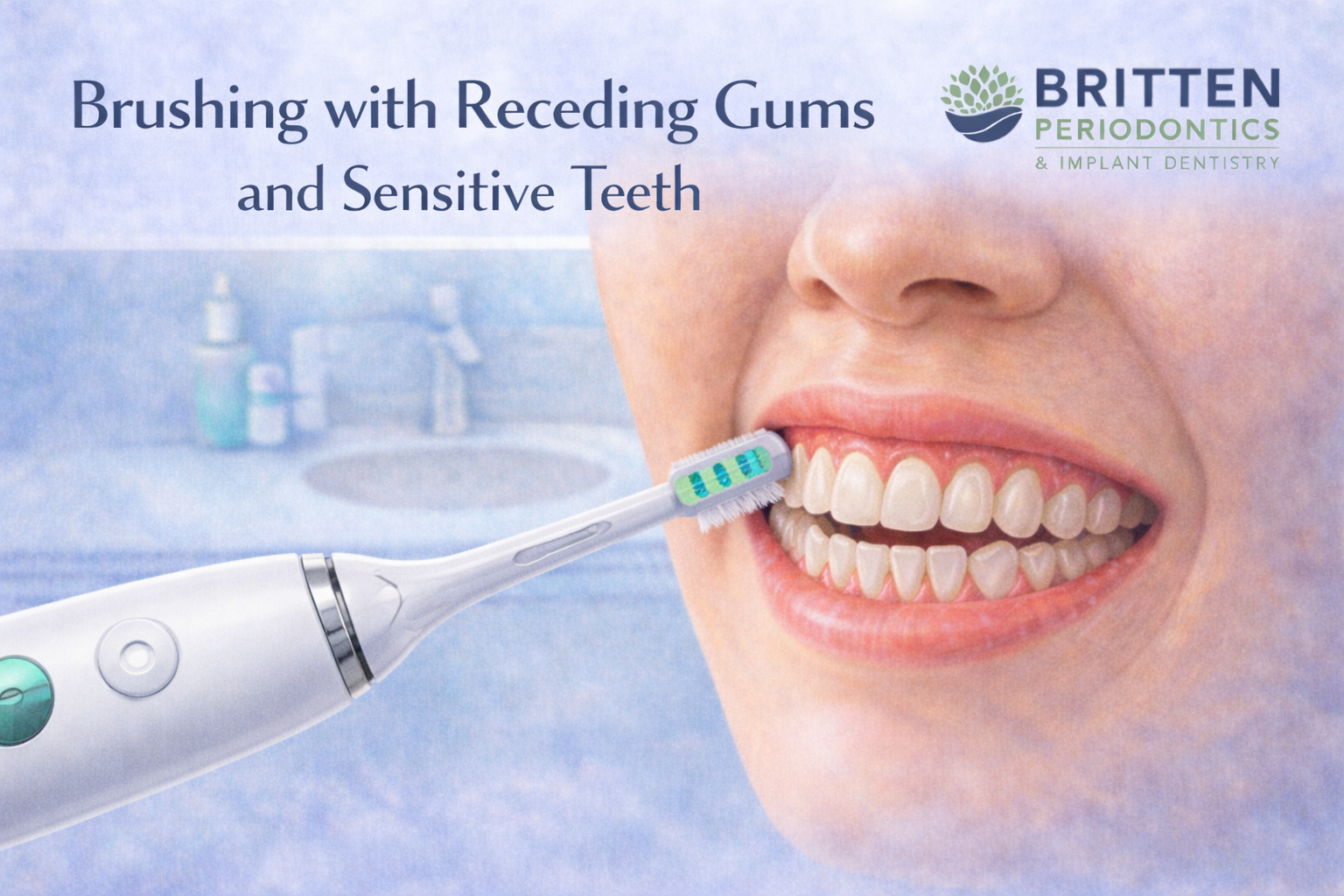
If your gums have pulled back, your brushing technique matters more than ever. Brushing with gum recession requires a gentle approach that cleans thoroughly without grinding the gumline like it owes you money. The goal is to remove plaque while protecting fragile tissue and exposed roots.
Choose the Right Tools
Start with a soft-bristled toothbrush or an electric brush with a pressure sensor. We love the Sonicare by Philips. However, even a soft brush can cause damage if you scrub aggressively. In addition, use a fluoride toothpaste, and consider a sensitivity formula such as Sensodyne or a prescription toothpaste from your dentist such as Clinpro 5000 if cold drinks bother you.
Use a Gentle Technique
Angle the bristles toward the gumline and use small, controlled motions. Therefore, you clean where plaque collects without sawing away at the tissue. Meanwhile, avoid horizontal “back-and-forth” scrubbing, because it can worsen recession and wear notches into the teeth.
Don’t Forget Between the Teeth
Recession often increases spaces where food and plaque can trap. So floss daily or use interdental brushes and Soft-Picks if they fit comfortably. Also, a water flosser can help, especially around tight spots or dental work.
When Home Care Isn’t Enough
If recession progresses or sensitivity increases, you may need professional treatment. For example, a periodontist can evaluate bite forces, gum thickness, and inflammation and recommend targeted therapy or grafting if needed.
Small changes add up fast. As a result, improving technique can reduce irritation and protect your teeth long-term. At Britten Perio, we help patients tailor routines that actually work in real life. If you’re unsure whether you’re doing it right, ask for guidance on brushing with gum recession at your next visit.