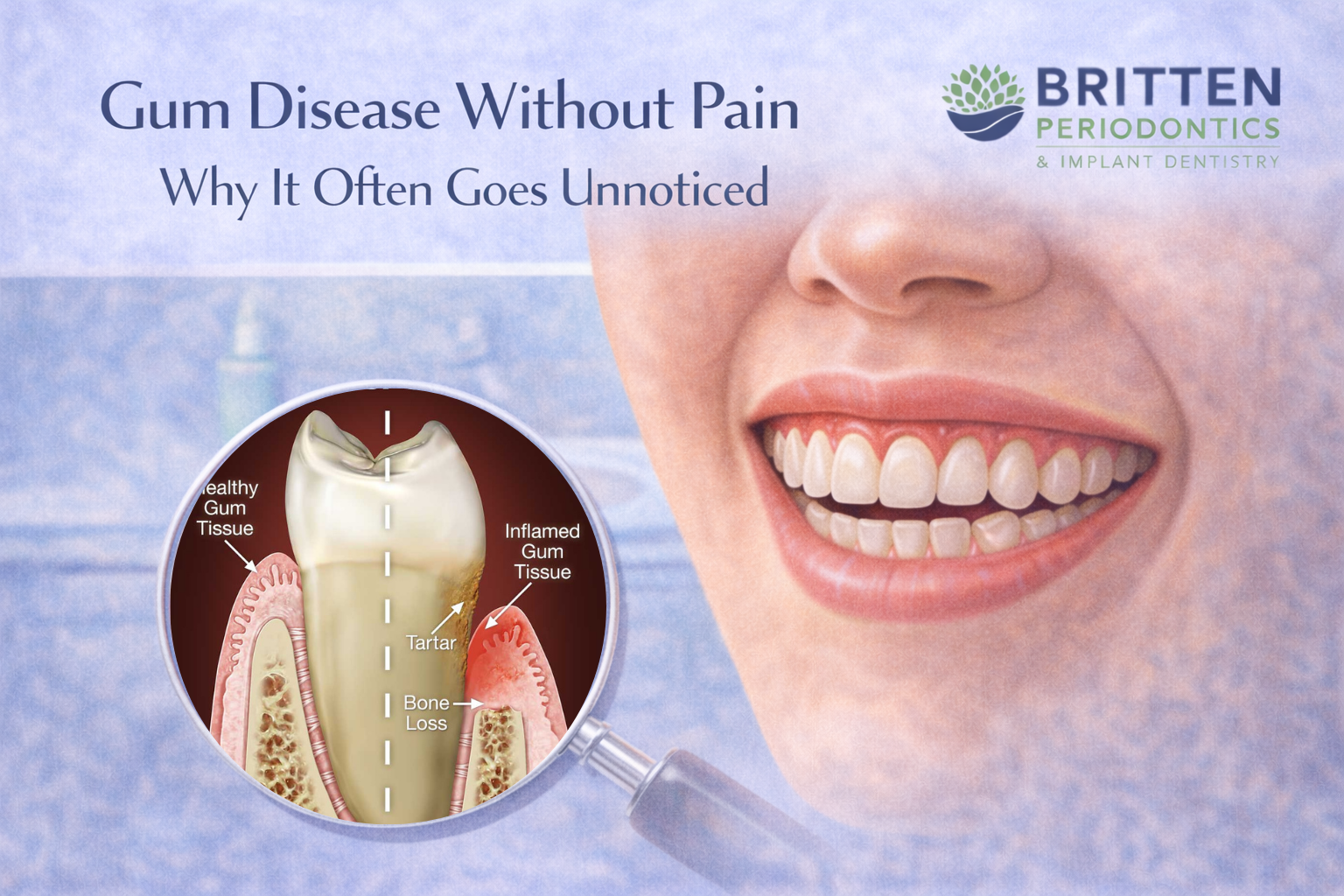
Many patients feel shocked when diagnosed because they had no discomfort. Gum disease without pain is extremely common, especially in the early and moderate stages. Unfortunately, that silence allows damage to progress unnoticed.
Why Pain Is Not an Early Symptom
Gum disease starts with inflammation, not nerve pain. The gums respond to bacteria with swelling and bleeding rather than sharp discomfort. Meanwhile, infection can spread below the surface without triggering strong warning signals.
Subtle Signs People Miss
Although pain may be absent, small changes often appear. Bleeding during brushing, bad breath, or gums pulling away from teeth are early clues. In addition, teeth may look longer as the gums recede. Because these changes happen gradually, they often feel “normal” over time.
What Happens If It’s Ignored
As gum disease advances, the supporting bone begins to break down. At this stage, teeth may loosen or shift. Unfortunately, pain often appears only after significant damage occurs. By then, treatment becomes more complex.
The Importance of Routine Exams
Regular dental visits allow providers to measure gum pockets and detect inflammation early. Periodontal evaluations catch disease long before pain starts. Early treatment protects bone, stabilizes gums, and reduces the need for surgical procedures.
Because gum disease without pain progresses quietly, prevention and routine care remain the strongest defense for long-term oral health.