If dental visits make your palms sweat, you’re not being dramatic, you’re being human. Sedation for dental anxiety can make periodontal care feel manageable and even, dare we say, boring. The goal is comfort, not “knocking you out” unless that’s medically appropriate.
Common Sedation Options
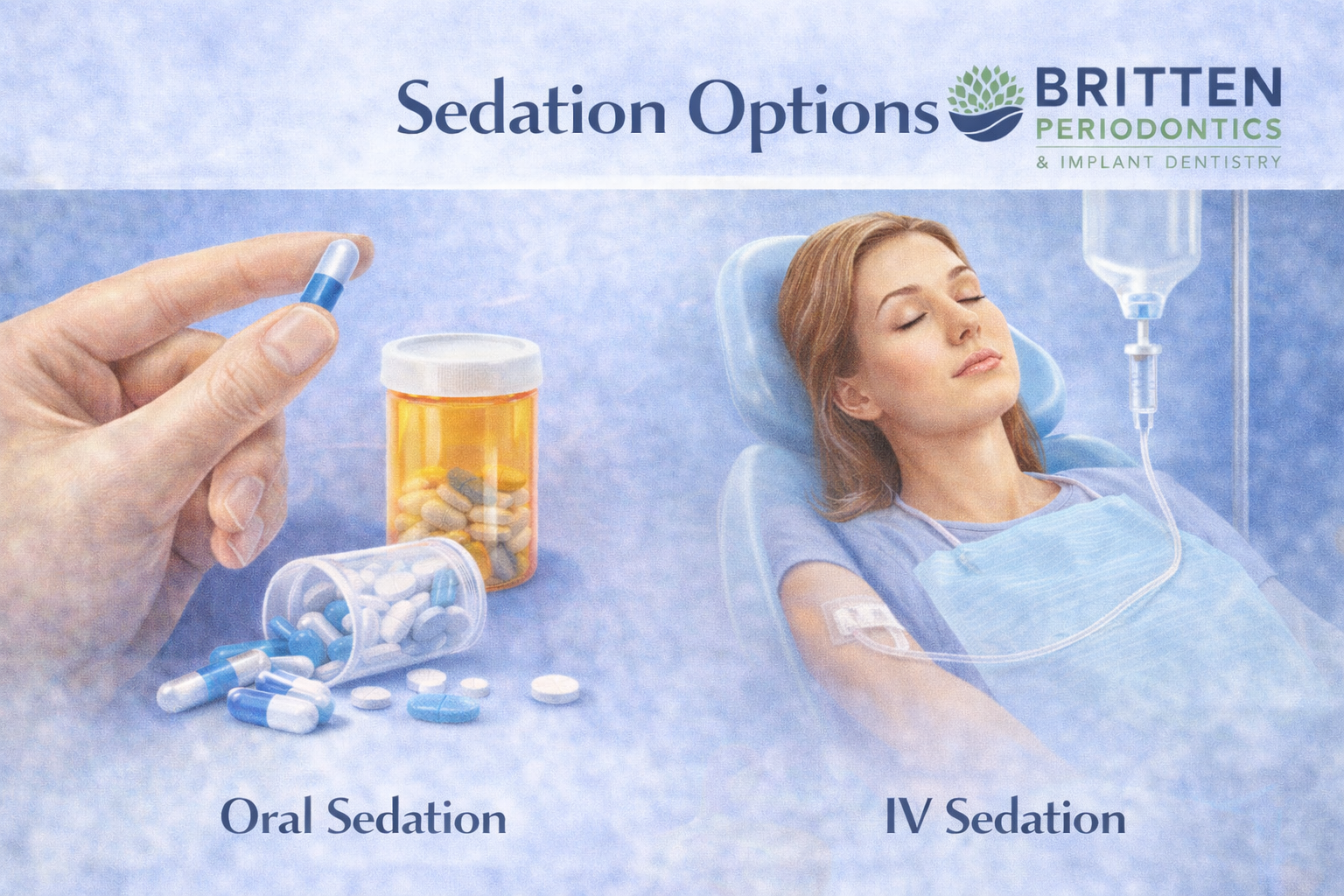
Many offices offer nitrous oxide (laughing gas) to take the edge off. In addition, oral sedation can provide deeper relaxation for longer appointments. Some cases may involve IV sedation, especially for complex procedures or significant anxiety. Meanwhile, local anesthetic still plays a key role so you stay comfortable at the treatment site.
How Sedation for Dental Anxiety Works
Sedation can help if you have strong gag reflex, difficulty sitting still, past trauma, or severe worry that leads to canceled appointments. Therefore, it often improves consistency, which improves outcomes. Also, if you need multiple areas treated, sedation may help you get more done in fewer visits.
Oral and IV sedation in periodontal care
Follow instructions about eating, drinking, and transportation. For example, oral or IV sedation typically requires someone else to drive you home. Also, plan a low-key day afterward so you can rest.
Comfort helps you show up, and showing up protects your gums. As a result, sedation can be a practical tool, not a luxury. At Britten Perio, we talk through options and match the approach to your health history and procedure needs. If you’ve been avoiding care, ask about options for managing dental anxiety. and take the first step back into the chair.