• (727) 586-2681
  • 1472 Jordan Hills Court, Clearwater, FL 33756

periodontal disease

Gingivitis
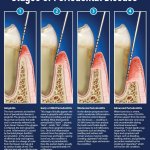
The first stage of periodontal disease is gingivitis. It is an inflammation of the gingiva or gums and is characterized by red, tender, swollen gums, and halitosis or bad breath. It is a mild form of gum disease that can usually be reversed with daily brushing and flossing, cleaning by a dentist or dental hygienist, healthy nutrition and the cessation of smoking. This form of gum disease does not involve any loss of bone and tissue that hold the teeth in place. Untreated gingivitis can lead to periodontitis.

Periodontitis
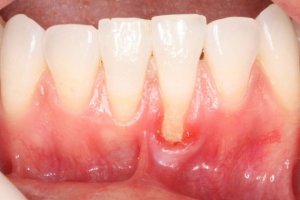
The next stage of periodontal disease is periodontitis. It causes irreversible damage to the bone and connective tissue that support the teeth in the mouth. As it progresses the pockets deepen and the body’s immune system initiates an inflammatory response in which the body in essence turns on itself and the bone and connective tissue that hold the teeth in place are broken down and destroyed. If not treated the teeth may eventually become loose and need to be removed. While the initial cause of gum disease is bacterial plaque, there are other risk factors making one susceptible to periodontal disease:

Risk Factors
Smoking
Smoking is one of the most significant risk factors associated with the development of gum disease, and can lower the chances for successful treatment.
Hormonal changes
Hormonal changes in girls and women can make the tissue more sensitive and make it easier for gingivitis to develop. This includes puberty, menopause, and pregnancy.
Diabetes
Diabetes lowers the body’s immune system, making it easier for people to develop infections including gum disease.
Medications
Medications can affect the flow of the saliva which makes the oral tissues vulnerable to infections. Some medications can cause abnormal overgrowth of the gum tissue which makes it difficult to keep the teeth and gum tissue clean.

For more information, visit: https://brittenperio.com/oral-health/periodontal-disease/

[iphorm id=”3″ name=”Contact form”]

Clearwater, FL

The best way to prevent periodontal disease is to brush and clean between your teeth effectively every day. Regular dental checkups and professional cleanings every 3 or 4 or 6 months are also an important part of maintaining periodontal health; the instruments and techniques used in these cleanings can reach into areas that your toothbrush and floss can’t.

It is also possible to detect early forms of gum disease by evaluating your gingival (gum) tissues, both visually and by examining their attachment levels to the teeth. And the health of your tooth-supporting bone can be assessed by taking dental radiographs (x-rays pictures).

There are other steps you can take: Eating right, reducing stress in your life, and giving up unhealthy habits like smoking will also help ensure that you keep your teeth for a lifetime.

Watch this video about Healthy Gums from Spear Education

https://spearedu.co/gWHjot0

Britten Perio discusses whether all dentures are created equal.

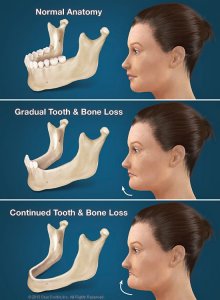
Sometimes, due to severe gum disease or decay, a person may lose all of their teeth. This as known as the fully edentulous patient.

Options for the fully ehttps://spearedu.co/9qD8aLpdentulous patient are:

Full dentures:
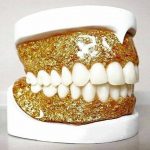
Dentures are worn during the day. This is used to replace one or many missing teeth.

Disadvantages
– They move a little when speaking or eating, which can be uncomfortable.
-Must come out at night and be placed in a cleaning solution.

Dental Implant
An implant is a great way to replace a missing tooth.

Advantages
This solution feels and acts the most like a natural tooth when chewing, brushing or smiling. A major advantage is no need to alter any other teeth when placing an implant. An implant is a great solution for a single missing tooth, and even more implants can replace many missing teeth. When smiling or talking there is no way to tell the difference between an implant and a natural tooth.

Disadvantages
The implant replaces the actual root of the missing tooth and heals in the bone for 3 to 7 months and we then begin the restorative phase. We or your dentist then place an abutment, to which a crown will be cemented. Dental implants are usually a more costly option, at least initially, but are often the best long-term investment.

Do Nothing
There is always the option to do nothing.

Advantages
Saves money, at least initially

Disadvantages
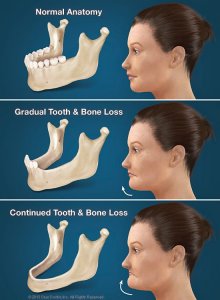
When a tooth is removed, the bone shrinks away and the other teeth in the area will shift to fill the gap. This can sometimes lead to other problems like shifting of other teeth, causing bone loss or decay around the existing teeth as they become more difficult to clean.

If you have questions about replacing any teeth lost to fractures, decay or gum disease, contact us today at 727-586-2681.

Here is a great video from Spear Education

https://spearedu.co/oSAZNEa

Infographic from Britten Periodontics sharing surprising facts about the link between smoking and periodontal disease.

Dr. Britten is highly concerned about his patients who smoke. The likelihood of developing advanced periodontal disease or gum disease can be up to six times higher in smokers. Periodontal disease is an extremely serious condition affecting not only the gums, but also the membranes and ligaments and bone supporting the teeth.

Many studies on smoking and periodontal disease have concluded that smokers have:

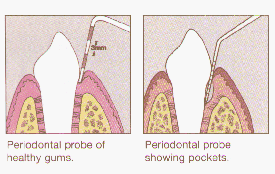
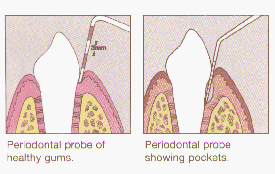
  • Deeper probing depths and a larger number of deep pockets in the gums.
  • More attachment loss including more gingival recession
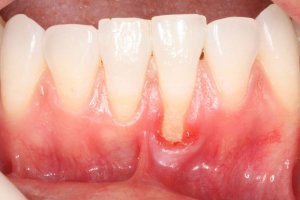
  • More alveolar boneloss & tooth loss
  • Less gingivitis and less bleeding on probing
  • One of the major problems with smoking is that it tends to mask the damage being caused to teeth and gums. This damage can be difficult to detect, producing very few early warning signs of advanced periodontal disease. For years it was thought that nicotine being a vasoconstrictor was causing less blood flow to the gums, causing less infection-fighting white blood cells to reach the area.  Newer studies are showing that smoking appears to have a long-term affect the inflammatory lesions, or diseased gums of smokers, which have less blood vessels in them than in non-smokers.
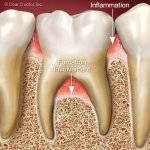
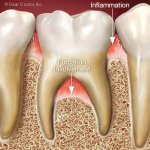
  • More teeth with furcation involvement (where the bone levels have been destroyed below the area where the roots of the teeth meet, leaving this area exposed, making it prone to further destruction as well as decay.
  •  Additionally, nicotine affects saliva, causing it to become thicker so it is less able to wash away acid created after eating. As a result heavy smokers can be more likely to suffer from tooth decay than non-smokers, even though they may practice good oral hygiene.Smoking has a profound effect on the immune and inflammatory system. Smokers have more infection-fighting cells in their body, but fewer of these helpful cells make it into the gingival pocket. Studies also show that these good cells have a decreased ability to accomplish their function, which is to destroy harmful periodontal bacteria. Adhesion molecules are being found within smoker’s tissues, in the white blood cells, in the inflammatory lesions, and even in the supporting gingival tissues. Studies have shown impairment in defensive functions of other defensive blood cells, even those using smokeless tobacco due to the high concentrations of nicotine.Smoking also impairs the healing of dental implants and even in the healing from all other aspects of peroidotnal treatment including non-surgical treatments (including scaling and root planing or “deep cleaning”), surgical treatment, bone grafting and tissue grafting. Studies have shown that tobacco smoke and nicotine affect blood vessels in the gums, healthy bone-building cells, connective tissue matrix, the jaw bone and even the root surface itself. Tooth root surfaces in smokers have actually been shown to be contaminated by products of smoking such as nicotine, cotinine, acrolein and acetaldehyde, which may inhibit the gum tissue from healing around the roots of teeth as they should.  Smoking has been shown to affect human bone, and is a risk factor for osteoporosis, which is also a risk factor for periodontal disease.

    As a periodontist, Dr. Britten is a specialist in treating advanced periodontal disease and is able to provide patients with the very latest techniques and treatments to help slow down this condition. Where teeth are lost then one option is to replace them with dental implants, but smoking is not advisable during this treatment because it does slow down healing.

    If you do currently smoke and value your smile, it’s worth thinking about quitting.

    [iphorm id=”3″ name=”Contact form”]

Graphic at Britten Periodontics showing how smoking increases the risk of gum disease and affects oral health.

Dr. Britten is highly concerned about his patients who smoke. The likelihood of developing advanced periodontal disease or gum disease can be up to six times higher in smokers. Periodontal disease is an extremely serious condition affecting not only the gums, but also the membranes and ligaments and bone supporting the teeth.

Many studies on smoking and periodontal disease have concluded that smokers have:

  • Deeper probing depths and a larger number of deep pockets in the gums.

  • More attachment loss including more gingival recession

  • More alveolar boneloss & tooth loss

  • Less gingivitis and less bleeding on probing

One of the major problems with smoking is that it tends to mask the damage being caused to teeth and gums. This damage can be difficult to detect, producing very few early warning signs of advanced periodontal disease. For years it was thought that nicotine being a vasoconstrictor was causing less blood flow to the gums, causing less infection-fighting white blood cells to reach the area.  Newer studies are showing that smoking appears to have a long-term affect the inflammatory lesions, or diseased gums of smokers, which have less blood vessels in them than in non-smokers.

  • More teeth with furcation involvement (where the bone levels have been destroyed below the area where the roots of the teeth meet, leaving this area exposed, making it prone to further destruction as well as decay.

  • Additionally, nicotine affects saliva, causing it to become thicker so it is less able to wash away acid created after eating. As a result heavy smokers can be more likely to suffer from tooth decay than non-smokers, even though they may practice good oral hygiene.

Smoking has a profound effect on the immune and inflammatory system. Smokers have more infection-fighting cells in their body, but fewer of these helpful cells make it into the gingival pocket. Studies also show that these good cells have a decreased ability to accomplish their function, which is to destroy harmful periodontal bacteria. Adhesion molecules are being found within smoker’s tissues, in the white blood cells, in the inflammatory lesions, and even in the supporting gingival tissues. Studies have shown impairment in defensive functions of other defensive blood cells, even those using smokeless tobacco due to the high concentrations of nicotine.

Smoking also impairs the healing of dental implants and even in the healing from all other aspects of periodotnal treatment including non-surgical treatments (including scaling and root planing or “deep cleaning”), surgical treatment, bone grafting and tissue grafting. Studies have shown that tobacco smoke and nicotine affect blood vessels in the gums, healthy bone-building cells, connective tissue matrix, the jaw bone and even the root surface itself. Tooth root surfaces in smokers have actually been shown to be contaminated by products of smoking such as nicotine, cotinine, acrolein and acetaldehyde, which may inhibit the gum tissue from healing around the roots of teeth as they should.  Smoking has been shown to affect human bone, and is a risk factor for osteoporosis, which is also a risk factor for periodontal disease.

As a periodontist, Dr. Britten is a specialist in treating advanced periodontal disease and is able to provide patients with the very latest techniques and treatments to help slow down this condition. Where teeth are lost then one option is to replace them with dental implants, but smoking is not advisable during this treatment because it does slow down healing.

If you do currently smoke and value your smile, it’s worth thinking about quitting.

For more information, contact us today at 727-586-2681.

[iphorm id=”3″ name=”Contact form”]

Educational graphic from Britten Perio providing valuable information on how to prevent re-infection of your gums after periodontal treatment.

If you’ve undergone treatment for periodontal (gum) disease, you know how involved it can be, whether your treatment required nonsurgical therapy, surgical therapy or a combination of both.

Following gum surgery or scaling and root planing, a nonsurgical periodontal therapy, plaque and calculus (hardened plaque deposits) are removed and as they heal swollen, red gums finally begin to regain their healthy pink color.

Treatment does not stop there. If it does, there’s a high chance of a re-infection of the gums.

Periodontal maintenance (PM) is important for gum disease patients after treatment. Plaque, a thin film of bacteria and food particles responsible gum disease, continue to grow again on your tooth surfaces as it did before. Diligent, daily brushing and flossing to curb that development.

It is also important to keep up regular dental visits for advanced cleaning to remove hard to reach plaque and calculus. For patients with gum disease it is usually four but for some advanced gum disease patients, six times a year, especially just after treatment. Many of our patients alternate visits for periodontal maintenance between our office and their general dentist so that their periodontal condition is closely monitored, as well as the health of their teeth.

Our goal is to reduce the chances of re-infection. To do this, we’ll thoroughly examine your teeth, gums and any implants for signs of disease (as well as an oral cancer screening). This includes an assessment the health of your teeth and gums and to see how well you’re doing with plaque control and review your recommended customized daily oral hygiene instructions.

Overall, we want to prevent the occurrence of any future disease and treat it as soon as possible if it relapses. Keeping up with homecare and a routine periodontal maintenance schedule will help ensure your gums continue to stay healthy.

If you would like more information on periodontal disease, please contact us or schedule an appointment for a consultation 727-586-2681.

[iphorm id=”3″ name=”Contact form”]
Explanation from Britten Periodontics about why many patients need to take antibiotics before their dental visit as a preventive measure.

What is antibiotic prophylaxis or “premedication” for a dental procedure? How do I know if it applies to me?

Antibiotic prophylaxis, or premedication, refers to giving a patient a loading dose of antibiotics in preparation for a dental surgical procedure, dental hygiene visit or other dental treatment dealing with the teeth or gums. During some dental treatments, bacteria your mouth can enter your bloodstream. In most people, the immune system kills these bacteria. But in some patients, bacteria from the mouth can travel through the bloodstream and cause an infection somewhere else in the body. Antibiotic prophylaxis, or dental premedication may offer these patients extra protection. Patients that normally require antibiotic prophylaxis have fallen under 2 categories: those with joint replacements or certain heart conditions. Some other health issues such as breast implants, brittle diabetics or organ transplant patients may require dental premedication, based on a physician’s recommendations.

Up until 2012, antibiotics were recommended for two years after joint replacement surgery or for a lifetime. Since that time, physicians and dentists have become more concerned about the potential harm of antibiotics including risk for anaphylaxis (allergic reaction), antibiotic resistance, and opportunistic infections such as Clostridium difficile (C-diff) were included in creating the new recommendation.

The 2015 American Dental Association stated that “In general, for patients with prosthetic joint implants, prophylactic antibiotics are NOT recommended prior to dental procedures to prevent prosthetic joint infection.” However, many orthopedic surgeons are still recommended premedication with antibiotics for their patients for 2 years or a lifetime.  In patients with a history of complications associated with their joint replacement surgery, prophylactic antibiotics or premedication with antibiotics should be considered after consultation with the patient and orthopedic surgeon.

If you have a joint replacement and are unsure whether you should premedicate for your dental appointments or not, it is best to contact your orthopedic surgeon to determine what is best for you.

In patients with certain heart conditions, dental premedication is recommended to avoid infective endocarditis.  Infective endocarditis (IE), also called bacterial endocarditis (BE), is defined as an inflammation of the endocardial surface of the heart. Endocarditis generally occurs when bacteria or other germs from another part of the body enter and spread through the bloodstream and attach to damaged areas in the heart. If left untreated, endocarditis can damage or destroy the heart valves and can lead to life-threatening complications.

The American Heart Association says that premedication for dental procedures is required for the following conditions:

  • “A prosthetic heart valve or who have had a heart valve repaired with prosthetic material.
  • A history of endocarditis.
  • A heart transplant with abnormal heart valve function.
  • Certain congenital heart defects including:
    • Cyanotic congenital heart disease (birth defects with oxygen levels lower than normal) that has not been fully repaired, including children who have had a surgical shunt and conduits.
    • A congenital heart defect that’s been completely repaired with prosthetic material or a device for the first six months after the repair procedure.
    • Repaired congenital heart disease with residual defects, such as persisting leaks or abnormal flow at or adjacent to a prosthetic patch or prosthetic device.”

Patients that have had stents placed in their hearts or a history of coronary artery bypass surgery no longer require to premedicate with antibiotics prior to dental procedures under the American Heart Association’s guidelines. Numerous scientific evidence concluded that the risk of adverse reactions to antibiotics generally outweighs the benefits of prophylaxis for many patients who would have been considered eligible for prophylaxis in previous guidelines. Concern about the development of drug-resistant bacteria also was a factor for the simplified guidelines.

The 2014 American Dental Association & American College of Cardiology guidelines add that optimal oral health is maintained through regular professional dental care and the use of appropriate dental products, such as manual, powered, and ultrasonic toothbrushes; dental floss; and other plaque-removal devices.

Antibiotic dosage and schedule

  • 1 hour before the procedure to allows the antibiotic to reach adequate blood levels. However, if the dosage of antibiotic is inadvertently not administered before the procedure, the dosage may be administered up to 2 hours after the procedure.
  • Patients not allergic to penicillin: oral amoxicillin 2g (50 mg/kg for children)
  • Patients allergic to penicillin or ampicillin: oral cephalexin 2g (50 mg/kg for children) or clindamycin 600 mg (20 mg/kg for children)

If you have questions about whether you need to premedicate for your dental procedures, we will be happy to answer any questions you may have. It is best to carefully consider this matter with both you and your physician or surgeon and we are always happy to communicate with both.  Contact us today 727-586-2681 with any questions.

Diabetes Awareness Month campaign by Britten Periodontics highlighting the link between diabetes and oral health.

Did you know?

Your dentist or dental hygienist may be able to tell if you have diabetes before you even know you do? Clues in the mouth, medical symptoms you are experiencing and reporting to them, and even a chairside test done right in the dental office can help your dentist determine that further testing for diabetes is necessary

A dentist can examine your mouth for clues of diabetes. There are signs in the mouth associated with diabetes:

-Periodontal disease
-Dental caries
-Burning mouth syndrome
– Oral candidiasis (common in those with poor glycemic control)
-Salivary dysfunction
-Neurosensory disorders
-Soft tissue abnormalities such as stomatitis or lichen planus
-Xerostomia
(Source: http://clinical.diabetesjournals.org/content/32/4/188.full)

Also, a patient that has 26% of periodontal pockets measuring 5 mm’s or greater or 4 or more missing teeth (not including the third molars), has a 72% chance of having a metabolic challenge. Diabetes is considered a metabolic disease.

Patients often see their dentist or dental hygienist more often than any other healthcare professional. Make sure to answer their questions thoroughly and accurately about your health.

Health risk factors for diabetes:

– Overweight or obese – BMI greater than 25
– High blood pressure
– Familial history of diabetes
– High cholesterol
– History of heart disease
– Other symptoms or complaints may include thirst, urinating frequently, constant fatigue, weight loss (Type 1), blurred vision, and uncontrolled infections even within the mouth (poorly controlled Type 2 diabetics).

Effective January 1, 2018, a chairside diabetes HbA1c (Hemoglobin A1c) test may be able to be performed by your dentist right in their office if they suspect diabetes or prediabetes. A patient with a test result of 5.7 or greater indicates a 92% chance the patient is metabolically challenged. At this point, your dentist can refer you to a physician for further testing.

Periodontal disease and diabetes have a direct effect upon one another. It is important to Dr. Britten to improve not only the oral health, but the overall health of each and every one of his patients. For more information on oral health and diabetes contact us at 727-586-2681.

[iphorm id=”3″ name=”Contact form”]
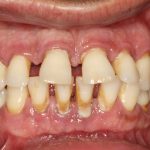
Diabetes Awareness Month campaign by Britten Periodontics highlighting the link between diabetes and oral health.

Did you know that 90% of pre-diabetics are unaware of their condition and 25% of Type II diabetics are unaware they have the disease? Many patients see their dentist or dental hygienist more often than they see their primary care physician. This is particularly true for people with periodontal (gum) disease, who require more frequent dental hygiene visits or gum treatments. Your dentist or dental hygienist should take a thorough medical history at each visit.  Some of the things they should look for which could indicate diabetes or prediabetes. Risk factors that indicate a potential for diabetes or pre-diabetes include:

  • Overweight or obese – BMI greater than 25
  • High blood pressure
  • Familial history of diabetes
  • High cholesterol
  • History of heart disease
  • Other symptoms or complaints may include thirst, urinating frequently, constant fatigue, weight loss (Type 1), blurred vision, and uncontrolled infections even within the mouth (poorly controlled Type 2 diabetics).

There are also dental clues that may indicate diabetes.

  • A patient that has 26% of periodontal pockets measuring 5 millimeters or more or 4 or more missing teeth (not including wisdom teeth), has a high chance of having a metabolic problem – and diabetes is a metabolic problem.
  • Periodontal disease
  • Dental caries
  • Burning mouth syndrome
  • Oral candidiasis (common in those with poor glycemic control)
  • Salivary problems or dry mouth
  • Neurosensory disorders
  • Soft tissue abnormalities such as stomatitis or lichen planus
  • Dry mouth

A chairside diabetes HbA1c (Hemoglobin A1c) test may soon be able to be performed in our practice, or if you have had a recent test with your doctor showing a result of 5.7 or greater indicates a 92% chance the patient is metabolically challenged. At this point, the patient should be referred to their physician.

If you are concerned about your oral health or are experiencing symptoms in your mouth or health that could be related to diabetes, contact us today 727-586-2681.

[iphorm id=”3″ name=”Contact form”]

Informative graphic by Britten Periodontics illustrating the dangers of smoking on periodontal health.

Advanced Periodontal Disease and Tooth Loss in Smokers

Quitting smoking can be very difficult to committing to, even if you know the health risks and potential benefits of giving up. Most people are all too well aware of  the links of smoking to lung cancer and advanced periodontal disease, but one of the major problems with smoking is that it tends to mask the damage being caused to teeth and gums. Reduced blood flow in the inflammatory lesions of smokers makes it harder for the body to fight infection by reducing the flow of essential nutrients to damaged tissues. At the same time the body is also less able to transport toxins away from the infection site. Smoking makes it harder to see the damage being caused to gums, so if you have any signs of active gum disease, then these will be far less visible.

Other chemicals contained within the smoke will combine with plaque bacteria and this is dangerous because x-rays taken of smoker’s teeth often shows that the jawbone has begun to shrink away from their teeth. This damage can be difficult to detect, producing very few early warning signs of advanced periodontal disease.

Additionally, nicotine affects saliva, causing it to become thicker so it is less able to wash away acid created after eating. As a result heavy smokers can be more likely to suffer from tooth decay than non-smokers, even though they may practice good oral hygiene.

Developing Advanced Periodontal Disease

This is a major problem and as a top periodontist in Clearwater, Florida, Dr. Todd Britten is highly concerned when seeing patients who smoke. The likelihood of developing advanced periodontal disease or gum disease is six times higher in smokers. Periodontal disease is an extremely serious condition affecting not only the gums, but also the membranes and ligaments and bone supporting the teeth.

Will You Lose Your Teeth If You Have Periodontal Disease?

In advanced cases, Britten may have little choice but to extract teeth that have already become loose. Smoking masks one of the major signs of gum disease which is bleeding gums and as a result periodontal disease can be very advanced before a smoker notices there is something wrong with their dental health. Although diligent brushing and flossing may slow down deteriorating gums, it’s often difficult for smokers to thoroughly remove all the plaque from the teeth due to smoking decreasing sensations in the mouth, making it difficult for them to detect areas that may not have been properly brushed.

As a periodontist, Dr. Britten is a specialist in treating advanced periodontal disease and is able to provide patients with the very latest techniques and treatments to help slow down this condition. Where teeth are lost then one option is to replace them with dental implants, but smoking is not advisable during this treatment because it does slow down healing.

If you do currently smoke and value your smile, it’s worth thinking about quitting.

Back to Blog

appointment

Categories