
• (727) 586-2681
  • 1472 Jordan Hills Court, Clearwater, FL 33756

periodontist

Britten Periodontics team in Clearwater Florida

Our community has been through a lot over the last few months, and all of us are looking forward to resuming our normal habits and routines. While many things have changed, one thing has remained the same: our commitment to your safety.

Infection control has always been a top priority for our practice and you may have seen this during your visits to our office. Our infection control processes are made so that when you receive care, it’s both safe
and comfortable. We want to tell you about the infection control procedures we follow in our practice to
keep patients and staff safe.

Our office follows infection control recommendations made by the American Dental Association (ADA) www.ada.org, the U.S. Centers for Disease Control and Prevention (CDC) https://www.cdc.gov/coronavirus/2019-ncov/hcp/infection-control.html and the Occupational Safety and Health Administration (OSHA) https://www.osha.gov/SLTC/covid-19/standards.html. We follow the activities of these agencies so that we are up-to-date on any new rulings or guidance that may be issued. We do this to make sure that our infection control procedures are current and adhere to each agencies’ recommendations.

You may see some changes when it is time for your next appointment. We made these changes to help
protect our patients and staff. For example:

• Our office will communicate with you beforehand to ask some screening questions. You’ll be
asked those same questions again when you are in the office.
• We have hand sanitizer that we will ask you to use when you enter the office. You will also find
some in the reception area and other places in the office for you to use as needed.
• You may see that our reception area will no longer offer magazines or other reading materials,
since those items are difficult to clean and disinfect.
• Appointments will be managed to allow for social distancing between patients. That might mean
that you’re offered fewer options for scheduling your appointment.
• We will do our best to allow greater time between patients to reduce waiting times for you, as well
as to reduce the number of patients in the reception area at any one time.

We look forward to seeing you again and are happy to answer any questions you may have about the steps we take to keep you, and every patient, safe in our practice. To make an appointment, please call our office at 727-586-2681.

Thank you for being our patient. We value your trust and loyalty and look forward to welcoming back our patients, neighbors and friends.

Sincerely,
Dr. Todd Britten and Team


Options for tooth replacement after tooth loss at Britten Periodontics in Clearwater, FL, including dental implants, bridges, and dentures to restore function and appearance.

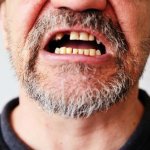
When a tooth is removed, the bone shrinks away and the other teeth in the area will shift to fill the gap. This can sometimes lead to other problems like shifting of other teeth, causing bone loss or decay around the existing teeth as they become more difficult to clean.

Watch this great video from Spear Education about missing teeth and tooth loss!

Click here:
https://spearedu.co/l2DeZob

If you have questions about replacing teeth lost to fractures, decay or gum disease, contact us today

Dr. Todd Britten discusses the effects of unconscious clenching and grinding.

Treating Worn Teeth – Fortunately, modern dentistry can restore the normal shape, appearance and function of worn teeth — beautifully and successfully!

The cause of tooth wear must be determined during an oral examination at the dental office. Once the cause has been identified, the stresses on your teeth can be reduced if need be. For example, you may need instruction on gentle, effective tooth brushing techniques; or some changes to your diet. If you have a clenching or grinding habit, a mouthguard can be custom-made for you that will protect your teeth during sleep or periods of high stress.

Lost tooth structure sometimes needs to be replaced so your bite functions properly and your teeth look great once again. Depending on the situation, this can be done with bonding, veneers, or crowns.

Watch this video from Spear Education

https://spearedu.co/OMYgKcH

Dr. Todd Britten, board-certified periodontist in Clearwater, Florida, with advanced training in periodontology, implant dentistry, and memberships in professional dental organizations.

A few years ago, Dr. Todd Britten successfully passed the rigorous requirements to become a Board-Certified Diplomate of The American Board of Periodontology. Board-Certified periodontists are held to a higher level of care and skill by the American Board of Periodontology and we know he is so proud to be a Diplomate of this professional organization.

“The Mission of the American Board of Periodontology is to Advance the Art and Science of Periodontics and Elevate the Quality of Periodontal care through the Examination, Certification, and Recertification of Periodontists and by Encouraging the Achievement and Maintenance of Diplomate status.”

Dr. Britten is committed to excellent patient care by continually updating his skills and knowledge of new procedures and technology so that he can provide the highest quality, least invasive care available in our industry.

A Diplomate is a periodontist who has made significant achievements beyond the mandatory educational requirements of the specialty and who is certified by the American Board of Periodontology.

To be educationally qualified for Board certification requires:

  • Certification as a dentist, including basic college education and completion of dental school to earn the D.D.S. or D.M.D. degree and;
  • Certification as a periodontist after successful completion of an educational program in Periodontology, which is accredited by Commission on Dental Accrediation of the American Dental Association.
  • Comprehensive qualifying and oral examination covering all phases of periodontal disease and its treatment, including dental implants.
  • Recertification every six years.
  • [iphorm id=”3″ name=”Contact form”]
Breakthrough laser procedure to preserve dental implants offered by Britten Periodontics, Clearwater periodontist Dr. Todd Britten.

Dental implants are a great way to give you a beautiful and functional smile, they are not without limitations. Some patients could experience swelling or infection around their implants, which is known as peri-implantitis.

If you noticed a change in your implants, Dr. Todd Britten can provide a breakthrough procedure following the LAPIP® protocol.

How the Procedure Works

This procedure is minimally invasive, due to the use of cutting-edge, gentle laser technology. This allows Dr. Britten to treat peri-implantitis without the need for incisions. During the procedure, our state-of-the-art PerioLase laser targets the inflamed area of the gum tissue and eliminates harmful bacteria and infection that has developed. There is no need to worry about an extensive recovery period, sutures or any incisions.

The importance of eliminating unhealthy tissue

Even though dental implants are a great option for patients who have lost their teeth due to periodontal disease, the disease can still continue even around dental implants.

It is essential that diseased implants receive proper treatment as soon as possible to protect these implants, other teeth, bone structure and oral health.

If you think your gums might be inflamed around your dental implants, schedule an appointment with us today. Contact us today to learn more about the LAPIP® protocol and its many benefits to you and your oral health.

[iphorm id=”3″ name=”Contact form”]

www.brittenperio.com

Vaping and its effects on oral health explained by Dr. Todd Britten, periodontist in Clearwater, Florida.

“Here in our Clearwater periodontal office, we have noticed that many young people and other patients feel that compared to traditional tobacco use, e-cigarettes are a safer and healthier option,” says Clearwater periodontist Dr. Todd Britten. “I see that companies selling these products are adding attractive and sweet flavoring products to attract young people. However, we are noticing in our dental practice that vaping may be as dangerous to oral health—if not more dangerous for the teeth and gums!”

Dr. Britten explained that E-cigarettes and vaporizers work by heating a liquid to generate aerosol, rather than smoke. The E-liquid in vaporizers and e-cigarettes are usually made up of propylene glycol, glycerin, flavorings, water, and in e-cigarettes, nicotine. One of the major ingredients used in vapes and e-cigarettes is a fluid called propylene glycol. “It is a like a thin sweet-tasting gel,” says Dr. Britten, “which when broken down becomes acetic acid, lactic acid, and propionaldehyde. We know in the dental community that acids are NEVER good for tooth enamel – that is what causes cavities!”  Dr. Britten also explained that it is believed that the water molecules in saliva and the tissues of the mouth will bond to the propylene glycol drying the mouth and its tissues out considerable. “We know well in the dental community how harmful dry mouth is in the development of both cavities and gum disease!”

Another ingredient in e-liquid is a combination of vegetable glycerin as well as flavorings which studies have shown  produces twice as much plaque on the teeth, which is also known as biofilm, and increased the stickiness of the bacteria to the teeth by about four times!  This, he explained, means more cavity-causing bacteria to stick to the teeth and roots and can lead to severe tooth decay as well as an increase of gum disease.

“Even for those who may be quitting smoking by switching to e-cigarettes or vapes, unfortunately, it is not a safer alternative for the teeth and soft tissues inside the mouth,” Dr. Britten says. “Nicotine users using an e-cigarette may have lower concentrations of nicotine in their blood, but we really haven’t seen what vaping and e-cigarettes do to the body long-term.”  But short-term, he says, dentists and dental hygienists are starting to see softer enamel, increased plaque and drier mouths with patients using these products.  Which is not good for patients, because as Dr. Britten says, the plaque bacteria in the mouth cause gum disease and the combination of these bacteria and acid in the mouth, cause dental cavities.

Britten Periodontics & Implant Dentistry is a periodontal practice offering patients personalized dental care in implant dentistry in Clearwater, Florida. Dr. Todd Britten offers sedation dentistry, which can be very helpful for those needing advanced treatment, suffer from PTSD or have a fear of the dentist.

Questions? Contact us at:

[iphorm id=”3″ name=”Contact form”]

Tips for managing chronic dry mouth from Britten Periodontics to improve oral comfort and health.

Have you ever noticed bad breath due to dry mouth?

Do you experience pain or discomfort from dry mouth?

Have you had changes in your oral health – like sudden decay or worsened gum disease?

Do you get sores in your mouth or on your tongue frequently?

Does your dry mouth interfere with your sleep?

Do you avoid certain foods because they are too difficult to eat with dry mouth?

Do you have trouble swallowing due to thick mucus?

If you answered “yes” to one or more of these questions, be sure to ask your dentist about dry mouth.  Chronic dry mouth is a condition that can be painful, or even unnoticed by a patient sometimes because they have gotten used to living with the discomfort or incovenience of choronic dry mouth.  It can occur due to medicine, medical conditions, or even lifestyle choices.  It can lead to significant oral health issues like cavities, gingivitis, periodontitis, or problems eating or wearing dentures.

 We have also found in our practice that different remedies help different patients combat chronic dry mouth. Here are some possible suggestions and options for patients with dry mouth:
1. Some patients find comfort from carrying water with them throughout the day and taking small sips.  Cold water may help soothe and calm fiery red tissues. For those without high blood pressure or an adversion to sodium, you can mix a pinch of baking soda in their water and swish and spit this mixture out throughout the day. Baking soda is alkalizing and can protect from decay.
2. A combination of over the counter Biotene products (gels, rinses, sprays, lozenges) used 5 times a day (A combination and routine of these products can usually be recommended by your dental health professional).  Many patients find Biotene Gel to be extremely comforting to their dry oral tissues, especially before bed time.  Patients using C-Pap appliances should use an oral gel as these devices often blow air which aggravates this condition greatly.
3. There is a product available via prescription called Neutrasal. Neutrasal works like saliva to help restore a healthy mouth. A powder pack is mixed and dissolved in one ounce of water, and swished for 1 minute before spitting.  It can be used 2 to 10 times a day, depending on what your dental health care provider recommends, and you should avoid eating or drinking for at least 15 minutes after use.
4. PerioSciences’ Anti-Oxidant Gel can also be helpful for our patients suffering from dry mouth.
5. Many patients with dry mouth should be on a strict caries prevention program, which can include prescription toothpaste, rinse, gel, trays, or in-office treatments.  Calcium and phosphate are often included in some of these products, which are minerals that help rebuild weakened enamel.
For more information, call us today at 727-586-2681 or visit our website at www.brittenperio.com
Dr. Britten, your dentist, or dental hygienist will review the cause of dry mouth, as well as your risks for periodontal disease or tooth decay.
Talk to your dentist about your dry mouth symptoms to see which dry mouth treatment is best for you!
Britten Periodontics team participating in community involvement and outreach events in Clearwater, Florida.
Informative graphic by Britten Periodontics illustrating the dangers of smoking on periodontal health.

Advanced Periodontal Disease and Tooth Loss in Smokers

Quitting smoking can be very difficult to committing to, even if you know the health risks and potential benefits of giving up. Most people are all too well aware of  the links of smoking to lung cancer and advanced periodontal disease, but one of the major problems with smoking is that it tends to mask the damage being caused to teeth and gums. Reduced blood flow in the inflammatory lesions of smokers makes it harder for the body to fight infection by reducing the flow of essential nutrients to damaged tissues. At the same time the body is also less able to transport toxins away from the infection site. Smoking makes it harder to see the damage being caused to gums, so if you have any signs of active gum disease, then these will be far less visible.

Other chemicals contained within the smoke will combine with plaque bacteria and this is dangerous because x-rays taken of smoker’s teeth often shows that the jawbone has begun to shrink away from their teeth. This damage can be difficult to detect, producing very few early warning signs of advanced periodontal disease.

Additionally, nicotine affects saliva, causing it to become thicker so it is less able to wash away acid created after eating. As a result heavy smokers can be more likely to suffer from tooth decay than non-smokers, even though they may practice good oral hygiene.

Developing Advanced Periodontal Disease

This is a major problem and as a top periodontist in Clearwater, Florida, Dr. Todd Britten is highly concerned when seeing patients who smoke. The likelihood of developing advanced periodontal disease or gum disease is six times higher in smokers. Periodontal disease is an extremely serious condition affecting not only the gums, but also the membranes and ligaments and bone supporting the teeth.

Will You Lose Your Teeth If You Have Periodontal Disease?

In advanced cases, Britten may have little choice but to extract teeth that have already become loose. Smoking masks one of the major signs of gum disease which is bleeding gums and as a result periodontal disease can be very advanced before a smoker notices there is something wrong with their dental health. Although diligent brushing and flossing may slow down deteriorating gums, it’s often difficult for smokers to thoroughly remove all the plaque from the teeth due to smoking decreasing sensations in the mouth, making it difficult for them to detect areas that may not have been properly brushed.

As a periodontist, Dr. Britten is a specialist in treating advanced periodontal disease and is able to provide patients with the very latest techniques and treatments to help slow down this condition. Where teeth are lost then one option is to replace them with dental implants, but smoking is not advisable during this treatment because it does slow down healing.

If you do currently smoke and value your smile, it’s worth thinking about quitting.

Information about TMJ disorders from Britten Periodontics, explaining symptoms and treatment options.

Headaches, neck pain, and frequent jaw tenderness or popping are signs you may be suffering from a TMJ condition.

What is the difference betweenTMJ and TMD?

The TMJ, or temporomandibular joints, are the two  joints on each side of the face that connect the jaw to the temporal bone of the skull. Each temporomandibular joint has a disc located between a ball and socket. The disc provides padding for chewing forces while enabling the jaw to open wide and glide and even rotate.  The TMJ work together during chewing, speaking and swallowing.  They control the lower jaw (mandible) as it moves forward, backward and side to side.  When the TMJ is not functioning properly, it is known as TMD. TMD is a disorder which includes any problem that prevents the joints, jaw muscles, ligaments or jaw bone that work to open and close your mouth from working properly.

A disruption in this complex system of muscles, ligaments, discs and bones from may result in a painful TMJ disorder.  TMJ disorders (or TMD) can be caused by arthritis,  jaw dislocation or injury, tooth and jaw alignment or can be complications due to muscle tension stress and tooth grinding. During a TMJ exam, your dentist will evaluate the joints and muscles for tenderness, clicking, popping, creaking and discomfort . Depending on the severity and cause of  any irregularities, the dentist may refer you to a physician or another dental specialist. There are many options for treatment of TMJ, ranging from very conservative treatments to more invasive surgeries. According to the American Dental Association, the “National Institute of Dental and Craniofacial Research recommends a “less is often best” approach in treating TMJ disorders”.

Treatments for TMD include:

– a soft diet (avoiding chewing gum or nail biting)

-simple pain care such as warm compresses, over the counter anti-inflammatory medications (Nsaids, ibuprofen)

– Relaxation techniques for jaw tension , such as help for stress reduction, meditation or biofeedback.

-physical therapy for jaw exercises or jaw massage. Physical therapy may also include  transcutaneous electrical nerve stimulator (TENS) to use low-level electrical currents to relax joint and facial muscles and provide relief or laser therapy.

-prescription medications for muscle relaxers, pain relief, or anti-anxiety medications,

– a night guard or bite splint to decrease clenching or grinding of teeth.

– sometimes an evaluation and adjustment of a person’s bite by their dentist can help.

-orthodontic treatment may be recommended to change jaw and teeth alignment for a more favorable position for TMJ health.

In extreme cases, surgical intervention may be advisable for TMD treatment. While other joints in our bodies can be treated by complete rest or isolation with a cast or splint… this is not easy with our jaw! Eating and speaking are so important in daily life! For those suffering from TMD, relief begins with a proper diagnosis, understanding of the underlying causes and often trying the more conservative methods first before considering surgical intervention.

If you feel you may be suffering from TMD, contact us today for more information. 727-586-2681

Back to Blog

appointment

Categories